Exterior Painting in Dubai: Coatings, Surface Repairs, Access and How to Hire an Exterior Painter
Exterior painting Dubai owners commission is a different job from painting inside. The wall faces sun for most of the year, dust that settles into the paint film, humidity that rises overnight, rare but heavy rain, and, near the coast, salt. A coat that would last years in a bedroom can chalk, fade or flake outdoors in a fraction of that time if the wrong product went on, or the right product went onto a wall that was not prepared.
Last updated: 16 October 2026
On this page
- Does your exterior need repainting? Reading the signs
- Why exterior paint fails in Dubai
- Coating systems for exteriors, and which suit which wall
- Surface by surface
- Preparation outdoors: the decisions that decide the result
- Exterior painting by building type
- Access methods compared
- When to paint, and how weather matters
- Colour and finish outdoors
- What exterior painting costs and how to read a quote
- What our exterior painting service in Dubai includes
- Mistakes that shorten the life of exterior paint
- Warranty and keeping the paint in good condition
- Hiring an exterior painter in Dubai
- Exterior painting Dubai: where we work
- Frequently asked questions about exterior painting in Dubai
Dubai Repair Pro is a Dubai LLC with its own employed painters. Our own team does the painting and the preparation. Access equipment such as scaffolding or suspended access may be hired in, and it is listed in the quote. This page treats exterior painting as a job in itself, whatever the building: a villa, a townhouse, a low-rise block, a shop, an office or a warehouse. If you own a villa and want the whole-house picture, including interior, boundary walls and gates, see our villa painting in Dubai page, which also carries our villa exterior prices.
The page covers how to read the signs that an exterior needs repainting, why paint fails here, the coating systems and which suit which wall, how each surface is prepared, how the job differs by building type, how access is arranged, when to paint, what colour and finish to choose, and how to hire an exterior painter in Dubai.
To start, send photos of the outside of the building on WhatsApp at +971 55 209 9785. A site inspection costs AED 100, and you get a written quote after it.
Does your exterior need repainting? Reading the signs
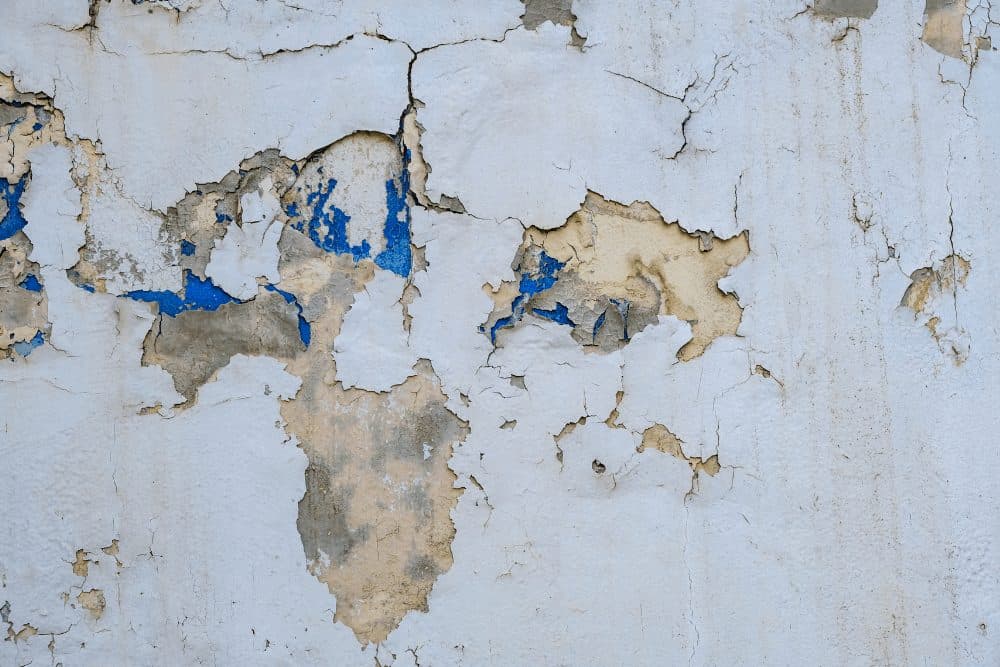
Exterior paint tells you what is wrong with it, if you know how to read it. The table below links what you see to the cause and to the right response. The response matters more than the colour: repainting a wall with an active fault only hides the fault for a short time.
| What you see | Likely cause | What it needs |
|---|---|---|
| Chalky powder on your hand when you rub the wall | The paint binder has broken down in the sun | Wash, prime or seal, then recoat; this is normal ageing |
| Colour faded or patchy | Pigment fading from sun, more on south and west walls | Recoat in a fade-resistant colour; check whether the old paint is still sound |
| Paint flaking or peeling in sheets | Poor bond, moisture behind the paint or a failed old coat | Strip back to sound paint, find the moisture source, prime, recoat |
| Blisters or bubbles | Moisture or heat trapped under the film | Open, dry and find the moisture source before recoating |
| Fine cracks, hairline, in the paint and plaster | Normal movement, shrinkage, thermal expansion | Open, fill with a flexible filler, coat with a flexible system |
| Wider or stepped cracks | Possible structural movement | Have the cause checked before painting; paint does not fix structure |
| White crust or salt marks (efflorescence) | Water moving through the wall and carrying salts | Fix the water source, remove the salts, then coat |
| Green or black growth in shaded or damp areas | Algae or mould where the wall stays damp | Clean, treat, fix the damp, use a suitable coating |
| Dark streaks below windows, parapets and pipes | Water running down the wall | Fix sealants, drips and overflows; clean, recoat |
| Hollow sound when tapped | Plaster has come away from the wall | Cut out and repair the plaster before any paint |
| Rust stains at gates, railings or fixings | Corroding metal | Treat the metal, prime, repaint |
A rule we apply on every exterior. If the wall is damp or the plaster is hollow, we say so before we quote a repaint. A fresh coat over a wall with an active moisture problem is money wasted. The fix may be sealing a parapet, repairing a drainpipe or waterproofing a roof edge. We handle that too (waterproofing in Dubai).
Why exterior paint fails in Dubai
Know the causes and you can judge both the product and the contractor.
Sun. Ultraviolet light breaks down the binder that holds the pigment together. The paint chalks, fades and loses its film. Walls facing the strongest sun age fastest.
Heat cycles. A wall can be hot in the afternoon and much cooler by morning. The wall expands and contracts, and a rigid paint film cracks along the movement. This is why flexible coatings exist.
Dust. Dust settles on the surface and in the pores. Paint put over dust bonds to the dust, not the wall, and peels. Washing is a structural step, not a tidy-up.
Humidity. Humidity and condensation can leave moisture in and behind the wall. Paint sealed over a damp wall blisters.
Rain. Rain is infrequent but can be heavy. It finds every crack, failed sealant and blocked outlet, and the water that gets behind the paint lifts it from inside.
Salt. Near the coast, salt on the wall has to be washed off before painting, or it draws moisture and pushes the paint off.
Poor preparation. The most common cause of all. Paint applied over loose paint, dust, algae or hollow plaster fails early whatever its quality.
Coating systems for exteriors, and which suit which wall
An exterior painter chooses a system, not just a colour. These are the main options. We use Jotun, National Paints and Dulux and choose the line with you after the inspection.
| System | What it is | Suits | Limits |
|---|---|---|---|
| Acrylic exterior emulsion | A weather-resistant water-based paint | Sound, sealed walls with no active cracking | Does not bridge cracks that move |
| Flexible (elastomeric) coating | A thicker, stretchy film that bridges fine cracks | Walls with hairline cracks, after the cracks are repaired | Needs a sound base; costs more than basic emulsion |
| Textured exterior coating | A coating with grain or relief | Hiding minor surface flaws; decorative finish | Harder to clean; harder to match later |
| Waterproof wall coating | A coating designed to resist water penetration | Walls exposed to wind-driven rain or damp | The wall still needs repairs; it is not a fix for a leak |
| Masonry sealer or primer | A base coat that binds a chalky surface and evens absorption | Chalky, porous or patched walls | Not a topcoat |
| Anti-algae or anti-fungal systems | Coatings with added protection against growth | Shaded or damp walls | Do not replace fixing the damp |
| Metal primer and enamel | Rust-inhibiting primer with a hard finish | Gates, railings, window frames, metal cladding | Needs rust treatment first |
| Exterior wood finish | Stain, varnish or paint made for outdoor timber | Pergolas, doors, fences | Needs regular maintenance |
Basic emulsion versus a better system. A sound, uncracked wall can take a good acrylic exterior emulsion. A wall with hairline cracks does better with a flexible coating, once the cracks are opened and filled. A wall that stays damp needs the damp fixed first, whichever coating goes on.
What to ask a contractor. Ask which system they will use on each wall, how many coats, and why. If the answer is "exterior paint, two coats" with no mention of cracks, primer or sealer, you are not comparing like with like.
Surface by surface
The surface decides the preparation and the system.
Cement render and plaster. The most common exterior surface. We check for hollow areas by tapping, cut out loose render and repair it, treat cracks, and prime chalky areas before coating. Our plastering services page covers render repair.
Concrete. Often found on boundary walls, parapets, columns and beams. Concrete can carry salts and surface laitance, which must be washed or brushed off. Cracks that move are checked before filling.
Blockwork. Blocks and mortar joints absorb water unevenly. A masonry primer or sealer evens the surface so the topcoat dries uniformly.
GRC, cladding and panels. Painting these surfaces requires a primer compatible with the substrate. We check the manufacturer's finish before painting and tell you if the surface should not be painted.
Metal. Gates, railings, shutters and frames need rust removed or treated, a metal primer and a suitable enamel. Painting over rust only hides it for a few weeks.
Timber. Pergolas, doors and screens need sanding back, a suitable primer or stain, and a finish designed for UV exposure.
Tile and natural stone. We do not usually paint these. If a stone or tile facade is stained, cleaning or sealing is usually the right answer.
Old paint. If the old coating is sound and well bonded, it can be a base. If it is chalky, flaking or peeling, it has to come off or be sealed. We test adhesion in the inspection, not after we start.
Preparation outdoors: the decisions that decide the result
Preparation outdoors is where the quote, the time and the lifespan are settled. These are the decisions we make at the inspection.
Washing. Walls are washed with water at a pressure that cleans without cutting into render. Dust, loose paint, algae and salt come off. The wall has to dry before priming, and in Dubai that is quick in warm weather.
Cracks. Fine cracks are opened with a tool, cleaned and filled with a flexible filler, so they can move without reopening. Wider or moving cracks are noted for a closer look. We do not fill a crack that is still moving.
Hollow plaster. Tapping a wall reveals areas where the plaster has lifted. These areas are cut out and replaced. Painting over hollow plaster hides it for months, and then the paint and plaster come off together.
Sealants and joints. Window surrounds, expansion joints and junctions between materials are sealed with flexible sealant. Old, cracked sealant is cut out and renewed.
Primer or sealer. A chalky or porous wall takes a sealer to bind the surface. New patches need priming so they do not show through the topcoat.
Moisture. If a wall reads damp, we trace the source. The cause might be a parapet, a pipe, a roof edge, a planter or an irrigation line against the wall.
Protection. Windows, doors, gates, cars, plants and paving are covered. Overspray on neighbours' property or on glazing is a risk to manage, not an accident to apologise for.
For the short sequence of steps on a villa, see the villa exterior steps. This page explains the decisions behind them.
Exterior painting by building type
The job changes with the building, and so do access, approvals and working hours.
Villas and townhouses
A villa exterior includes the facade, parapets, window surrounds, boundary walls, gates and pergolas. Community rules often govern colours. Our villa painting and house painting pages cover these in detail, including prices for villas. Exterior house painting for a townhouse is similar, with shared walls and tighter access between units. If the exterior is one phase of a larger job, our villa renovation page shows where it sits in the order of work.
Low-rise apartment buildings
Exteriors on low-rise blocks involve many owners or one owner's corporation. Approval usually comes from the building management or the owners' association, and the scope covers the full facade, not just one unit's wall. Balconies, balustrades, soffits and external stair walls are part of the job. We scope by facade and floor, and agree the access method with the management.
Shops and offices
Commercial exteriors have different timing. Painting is often done out of trading hours, with the entrance kept clear. Signage, shopfronts and glazing need masking. See commercial painting in Dubai.
Warehouses and industrial buildings
Large areas, metal cladding and masonry walls. The metal needs rust treatment and a metal-grade coating. Large flat areas are often sprayed, with careful control of overspray. The work is planned in zones so the operation can continue. For roof-related leaks, see roof waterproofing in Dubai.
Boundary walls and gates
Often left to the end, and often the first to look tired. Concrete walls are cleaned and sealed, and metal gates are treated and enamelled.
Interior and exterior together
If you want interior and exterior painting in Dubai under one quote, we do both, with the exterior first, so dust and repairs outside do not mark the new interior. You can also book either alone. For the interior, see interior painting in Dubai.
Access methods compared
Reaching the wall safely is half the work, and it often decides the price. Ask any contractor which method they will use and who is responsible for safety.
| Method | Reach | Best for | Notes |
|---|---|---|---|
| Ladders | Low walls | Single-storey walls, small areas | Quick; not suitable for large or high areas |
| Mobile towers | Medium height | Facades with level ground | Stable, movable; need clear ground |
| Scaffolding | Medium to high | Villas of two or three storeys, long facades | Safe working platform; takes time to build and strike |
| Mobile platforms and lifts | Medium to high | Large open areas | Fast; need level access for the machine |
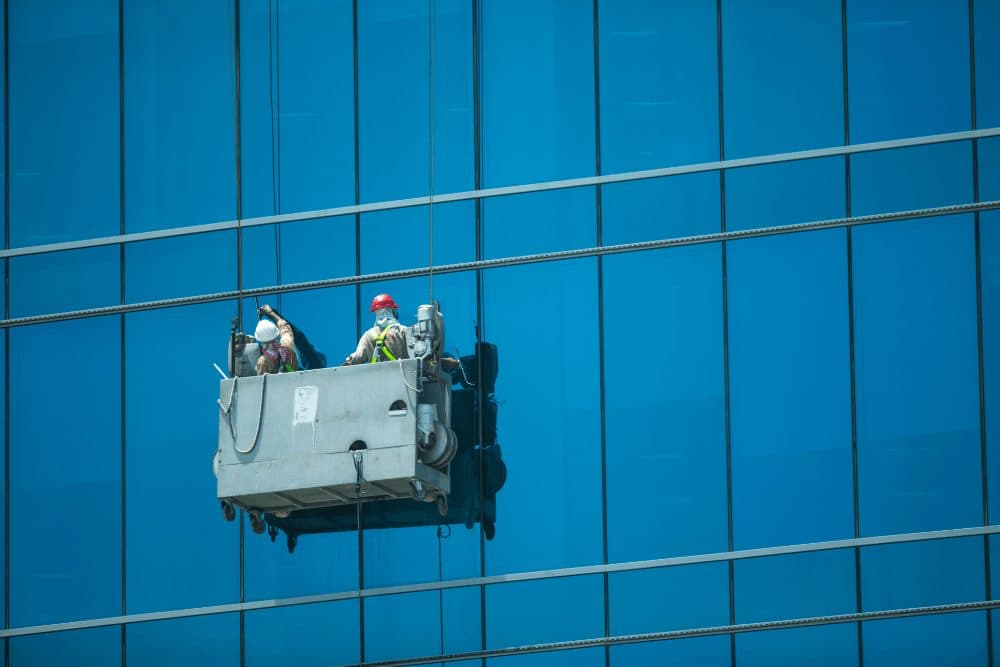
| Suspended access (cradles or rope access) | High | Taller buildings with no ground access | Needs specialist equipment, trained operators and building approval |
For taller exteriors we plan the access with the building. Where a building needs a permit, a safety plan or a booking for the access equipment, we deal with that before work starts. The access equipment is listed in the written quote, so it does not appear later as an extra.
When to paint, and how weather matters
Paint makers set a temperature range for application, and paint applied outside it can dry badly. In Dubai the hottest months push surfaces hot enough to dry paint too fast, which weakens the bond and leaves marks. The cooler months give gentler conditions, with fewer working constraints.
What this means in practice:
- Plan exterior work for the cooler months where you can. The paint dries evenly and the crew works in better conditions.
- Work around the sun. In hot weather, we start on shaded walls and move round with the shade.
- Avoid wet and damp surfaces. Walls must be dry before priming and coating. After rain, we allow time.
- Dust and wind. Wind carries dust onto wet paint. We plan the work and protect areas accordingly.
- Cure time. The paint needs time before it is exposed to water or heavy use.
If your work cannot wait for the cooler months, tell us. We adapt the schedule and the method instead of refusing the job, and the written quote shows the plan.
Colour and finish outdoors
Colour choices outside have practical effects.
Light colours and heat. Light colours reflect more sunlight than dark ones, and many owners choose them for that reason. Dark colours fade faster and show dust and streaks more.
Sheen. Matt hides surface flaws but holds dirt. A low sheen is easier to wipe and sheds dust better. High gloss is for metal and trim.
Colour consistency. Always paint a whole wall, corner to corner, from one batch. Touch-ups on an exterior wall rarely match once the old paint has weathered.
Colour rules. Many communities and buildings set colour palettes or require approval for exterior changes. Check your community's rules before choosing a colour. We can prepare a colour and materials description for an application, and we deal with building and community paperwork, including NOCs where a building requires them, before work starts.
Test patches. Paint a test patch on the wall and view it at different times of day. A colour that looks right on a card can look different on a large wall in direct sun.
What exterior painting costs and how to read a quote
Exterior prices depend on the area, the height, the condition and the access, so we quote after an inspection. Our villa exterior prices are on the villa painting page, and we do not publish other exterior prices, because a figure that ignores the building is not honest. What moves a quote:
- Wall area. The total area to be painted, not the floor area of the building.
- Height and access. Ladders cost less than scaffolding, and scaffolding costs less than suspended access.
- Condition of the surfaces. Sound walls need washing and coating. Walls with cracks, hollow plaster and failed sealant need repairs first.
- Coating system. Flexible and waterproof coatings cost more than basic emulsion.
- Number of details. Parapets, window surrounds, pipes, balconies and railings add time.
- Season and working hours. Work outside normal hours takes planning.
- Approvals. Permits and NOCs for the building.
A clear exterior quote shows:
| Quote line | What it should tell you |
|---|---|
| Washing and cleaning | Method and areas |
| Repairs | Cracks, plaster, sealants and quantities |
| Primer or sealer | Where and which type |
| Coating system | Product line, number of coats |
| Access | Method and who provides it |
| Details | Metal, timber, gates, balconies |
| Protection and cleaning | Windows, paving, plants, daily cleaning |
| Warranty | Length and what it covers |
| VAT | Shown separately at 5% |
Be careful of a quote that gives one price per square metre with no scope. It tells you nothing about preparation, the system or the access.
What our exterior painting service in Dubai includes
An exterior painting service in Dubai should be a defined package, not a general promise. This is what ours covers, and what to look for in any exterior painting services Dubai contractors offer.
Included in the written quote:
- Inspection of every wall, with photos of problem areas and a tapping test for hollow plaster.
- Washing of all surfaces to be painted.
- Repair of cracks, hollow plaster and failed sealant.
- Primer or sealer where the surface needs it.
- The coating system named in the quote, in the agreed number of coats.
- Metal and timber details treated with the correct primer and finish.
- Access equipment and its safety arrangements.
- Protection of windows, doors, gates, cars, plants and paving.
- Daily clean-up and removal of waste.
- A walk round the finished building with you, in daylight.
- A written 1-year workmanship warranty.
Listed separately, because they depend on what we find:
- Structural repairs beyond normal preparation.
- Waterproofing of roofs, parapets or balconies.
- Replacement of damaged cladding, windows or fittings.
- Applications for approvals that require drawings or fees.
What the service does not do. Paint does not stop a leak, close a structural crack or fix a failed roof. If the cause of the damage is water or movement, we tell you and quote the repair as a separate line. This is the honest difference between an exterior painting service in Dubai that protects the building and one that only changes its colour.
If you are comparing exterior painting Dubai-wide, ask each contractor for this list. Missing lines are where cheap quotes get their price.
Mistakes that shorten the life of exterior paint
- Painting over dust or salt. The paint bonds to the dirt and peels with it.
- Skipping the hollow-plaster check. Loose plaster takes the paint with it.
- One coat to save money. Exterior coats are thin by design, and the system needs its full thickness.
- Using interior paint outside. It chalks and fades within months.
- Painting a damp wall. Moisture blisters the film.
- Sealing hairline cracks with paint. The crack reopens through the coat.
- Painting in the midday sun. The paint dries too fast and the bond is weak.
- Mixing batches on one wall. Shade differences show in sunlight.
- Ignoring the tops of walls. Parapets and copings take the water first.
- Cutting the access. Painting what can be reached from a ladder and leaving the rest produces a patchy facade.
Warranty and keeping the paint in good condition
Our exterior work carries a 1-year workmanship warranty. The warranty covers the quality of our application, not new damage from leaks, structural movement or impact.
Ask any contractor:
- How long is the warranty, and is it in writing?
- What does it cover: peeling, blistering, flaking?
- What voids it: leaks, structural cracks, damage by others?
- Who comes back, and how fast?
Looking after an exterior.
- Rinse the walls. A gentle rinse removes dust before it bonds.
- Fix leaks quickly. Dripping pipes, overflowing tanks and broken irrigation lines stain and loosen paint.
- Keep sprinklers off the walls.
- Check the sealants around windows and joints once a year.
- Touch up early. A small area of damage fixed early stays small.
- Do not pressure-wash painted walls harshly. High pressure at close range can cut the paint.
Hiring an exterior painter in Dubai
An exterior painter in Dubai should be able to show exterior work, not only interiors. These checks work whether you are hiring an exterior house painter for a villa or a contractor for a building.
- Do they inspect the walls before quoting? Exterior quotes by phone are guesses.
- Do they test for hollow plaster and moisture?
- Is the coating system named, with the number of coats?
- Is access planned and listed?
- Is the scope in writing? Washing, repairs, primer, coats, details.
- Who does the work? Employees or subcontractors? Ours are employees.
- Do they handle building and community approvals?
- Can they show similar exterior jobs? Photos of the same type of building.
- Is the warranty in writing?
- Is VAT shown separately?
For the people side of the decision, see painters in Dubai, and for the company checklist, see painting services in Dubai.
Who offers the top exterior wall painting in Dubai?
The top exterior wall painting in Dubai is work that was inspected, repaired, primed, coated in the right system, and warranted in writing. A good-looking finish on the day of handover is not proof. The proof is the same wall a year later, with no chalking, flaking or new cracks. Ask each contractor to show a job at least a year old.
Top exterior wall painting Dubai owners can trust is judged a year after handover.
Exterior painting Dubai: where we work
Our exterior painting services in Dubai cover every community, including villa communities such as Dubai Hills, Mirdif, Al Barsha and Jumeirah, apartment buildings in Dubai Marina, JVC, Downtown and Business Bay, and commercial and industrial areas. If your area is not listed, we still cover it. Send the location on WhatsApp. For the Marina, see painting services in Dubai Marina.
Keep reading
Frequently asked questions about exterior painting in Dubai
How much does exterior painting cost in Dubai?
The price is set by the wall area, height, condition and access, so we quote in writing after a site inspection (AED 100), with 5% VAT shown separately. Villa exterior prices are on our villa painting page.
How often does an exterior need repainting?
When the paint shows chalking, fading, flaking or cracks. The interval depends on the sun exposure, the coating and the preparation, so we inspect the walls rather than quote a number of years.
Which paint is best for exterior walls in Dubai?
A weather-resistant exterior system from a known maker, chosen to suit the wall. Sound walls take acrylic exterior emulsion. Walls with fine cracks do better with a flexible coating after repair. We use Jotun, National Paints and Dulux.
Can you paint over old exterior paint?
Only if it is sound and well bonded. We test it. Loose, chalky or flaking paint is removed or sealed first.
Do you repair cracks before painting?
Yes. Fine cracks are opened and filled with a flexible filler. We report wider or moving cracks so the cause can be checked.
When is the best time to paint the outside of a building?
The cooler months give gentler conditions. We can work in hotter months by adapting the schedule and the order of walls.
Do you handle scaffolding and access equipment?
Yes. The access method and equipment are listed in the written quote. Equipment may be hired in, and our own team does the painting.
Can you paint a whole building, including tall facades?
We plan the access with the building. Where suspended access is needed, we arrange it with the building management, use specialist operators if the building requires them, and list it in the quote.
Do you do interior and exterior painting together?
Yes, in one quote or separately. We do the exterior first.
Is there a warranty on exterior painting?
Yes, 1 year on workmanship, in writing.
Get a quote for exterior painting
Tell us what you need, or send photos on WhatsApp. A site inspection costs AED 100, and you get a written quote after the visit.
- +971 55 209 9785
- info@dubairepairpro.com