Waterproofing in Dubai: Where You Need It, Which System to Use and How to Hire a Contractor
Waterproofing in Dubai is needed wherever water can reach concrete, a ceiling or a finished floor from the wrong side: bathroom and shower floors, balconies and terraces, roofs, basements, swimming pools, water tanks and warehouse slabs. Water proofing is cheap to do properly while the surface is bare and expensive to fix once tile, paint or a ceiling sits on top of a leak.
Last updated: 16 October 2026
On this page
- Do you need waterproofing? Signs and causes
- Where waterproofing goes, surface by surface
- Waterproofing systems explained
- What Dubai conditions ask of a system
- How a waterproofing job runs, step by step
- Mistakes that make waterproofing fail
- What waterproofing costs and how to read a quote
- Warranty: what to ask
- Choosing a waterproofing company in Dubai
- Waterproofing and the other trades
- Villa, apartment, warehouse: who is responsible
- Maintenance and annual contracts
- Waterproofing repair
- Waterproofing Dubai: where we work
- Frequently asked questions about waterproofing in Dubai
Dubai Repair Pro is a Dubai LLC with its own employed waterproofing team. Our own team does the waterproofing, and any access equipment that is hired in is listed in the quote. We apply the membrane, test it, and then, if the job needs it, our own tilers and painters finish the surface, so no trade waits for another and none blames another for damage.
This page is the hub for our waterproofing work. It shows how to tell whether you need waterproofing, which surfaces need which system, how a job runs, what mistakes make waterproofing fail, how to read a quote and how to choose a waterproofing company in Dubai, ours or anyone else's. Roofs have their own page, roof waterproofing in Dubai.
Our waterproofing services in Dubai are run by one team: the people who inspect your surface are the people who apply the system. The aim is the same whether you need a waterproofing contractor in Dubai or a waterproofing specialist: a leak that stays fixed. This page shows what a waterproofing service should cover and how to check it.
We work as:
- A Dubai waterproofing company for villas, apartments and offices.
- A waterproofing contractor Dubai warehouses call for slab and roof work.
- A provider of waterproofing services Dubai-wide, including the warehouse waterproofing Dubai operators need for roofs, slabs and gutters.
The quickest way to start is to send photos of the damp patch, ceiling stain or bathroom on WhatsApp at +971 55 209 9785. Photos let us judge some jobs, and others need a visit. A site inspection costs AED 100, and you get a written quote after it.
Do you need waterproofing? Signs and causes
A leak is rarely where the stain is. Water travels along slabs, pipes and cracks before it shows, so the first job is to work out where it is coming from. This table links what you see to the usual cause and to what we do next.
| What you see | Usual source | What we check or do |
|---|---|---|
| Stain or bubbling paint on a ceiling below a bathroom | Failed membrane or cracked grout in the bathroom above | Moisture readings, shower floor, drain and wall-floor joint |
| Stain on a ceiling below a balcony or terrace | Membrane failure, blocked drain or a crack at the threshold | Fall to the drain, drain outlet and tile joints |
| Dark patch on a ceiling under the roof | Roof membrane, a cracked upstand or a failed joint | Roof surface, upstands and penetrations (see the roof page) |
| White crust on walls or floors | Salts carried by moving water (efflorescence) | Source of the moisture, not just the crust |
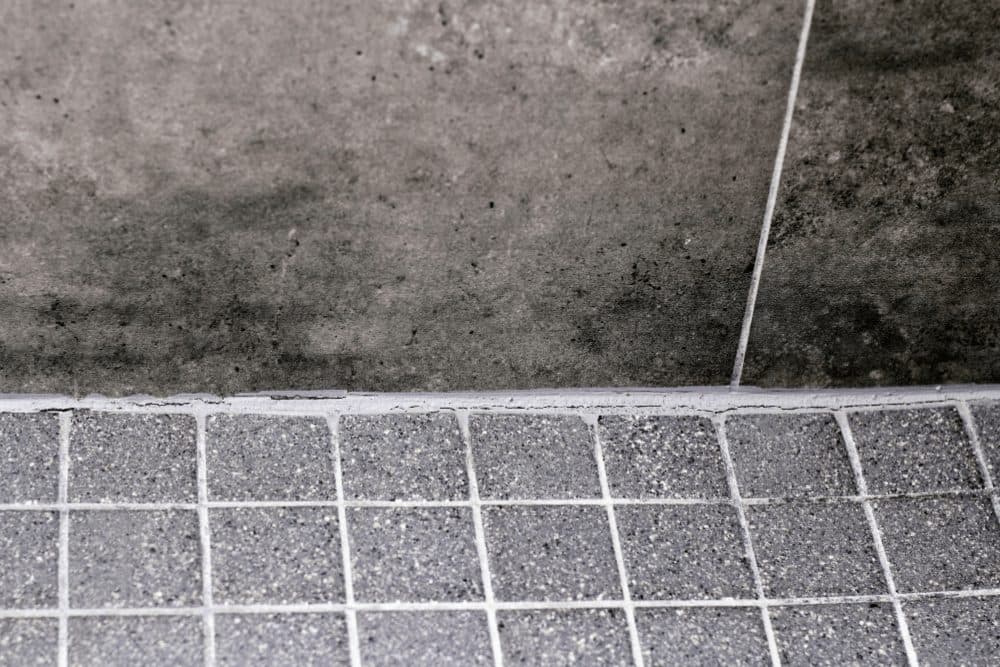
| Hollow-sounding tiles, loose tiles or lifted grout | Water behind the tile softening the bed | Tap test, then lift a sample tile |
| Damp smell with no visible stain | Moisture trapped in a wall cavity or under flooring | Moisture meter readings across the area |
| Water at the base of basement walls or on a basement floor | Groundwater or a failed external layer | Cracks, joints, the slab edge and any sump |
| A water tank that loses level or tastes off | Cracks or a failing lining | Inspection of the lining and joints |
Paint will not fix any of these. Paint over a damp wall blisters again within weeks, because the water is still arriving. Our guide to painting over damp and mould explains how we handle the paint side after the source is dealt with.
Not every stain means a failed membrane. A leaking supply pipe, a dripping air-conditioning drain or condensation on a cold wall can look the same. Part of the inspection is ruling those out, so you do not pay to waterproof a surface that was never the problem.
Where waterproofing goes, surface by surface
Different surfaces fail in different ways. This is how we think about each one.
Bathrooms, showers and wet rooms
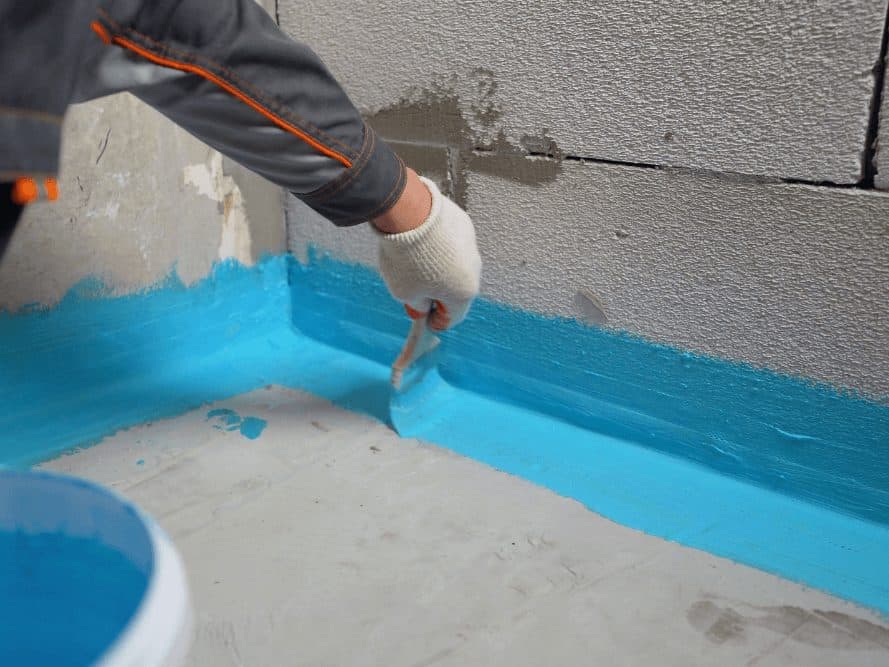
Bathroom floors, shower enclosures and the lower part of shower walls take water every day. Grout and tile are not waterproof; they shed water to the membrane under them. If the membrane is missing, thin or cut at the drain, water reaches the slab and the ceiling below. We lay the membrane up the wall past the splash zone, turn it into the corners, and seal around the drain and pipes before any tile goes down. See bathroom and kitchen tiles in Dubai for how the tile layer follows. For a whole bathroom, our bathroom renovation in Dubai page shows where the membrane and its water test sit in the order of work.
Kitchens, laundry rooms and maid's rooms
Anywhere with a floor drain or a washing machine needs the same treatment as a bathroom. These rooms are often overlooked, and a slow leak from a machine hose can run for months before it shows.
Balconies and terraces
A balcony is exposed to sun, rain and sand, and its slab usually sits over another unit or an entrance. The membrane has to fall to a drain, rise at the upstand, and survive foot traffic and tile on top. Movement at the threshold is a common failure point.
Roofs
Roofs take the full weight of sun, heat and the occasional heavy rain. The membrane system, the drainage and the detailing at upstands and pipes decide how long the roof lasts. We cover systems, drainage and typical failures on the dedicated roof waterproofing page. Waterproofing for roofs is also where waterproofing and thermal insulation meet, which we cover there.
Basements
A basement slab and walls sit below ground level, where groundwater and moisture press against concrete. Waterproofing a basement means dealing with cracks, joints and the slab edge, and sometimes a drainage layer. This is the hardest place to repair after the fact, which is why a basement waterproofing company should inspect before anything is coated.
Swimming pools
A pool shell leaks through cracks, joints and fittings, and a leak can undermine the ground around it. Swimming pool waterproofing is done in the structure, under the finish, and finished with tile or a coating that suits the pool.
Water tanks
A tank holds a constant head of water, so a small crack becomes a steady loss. Tanks that hold drinking water need materials that are safe for it, which is why potable water tank waterproofing is a different job from waterproofing a roof tank used for other purposes.
Warehouses and industrial buildings
Warehouse waterproofing usually means a large roof and a large slab. The priorities are roof drainage, the movement joints between slabs and keeping stock dry. Metal roofs add the fixings and laps as places for water to enter.
Villas, external walls and boundary walls
A villa has more exposed surface than an apartment: external walls, planters, the roof terrace and the boundary wall. Villa waterproofing is mostly about stopping water entering at joints, around windows and at planter edges. Many villas also have a roof terrace and a balcony, both of which follow the rules above. If the waterproofing is part of a larger job, our villa renovation page shows how it is phased through the house.
Locations people ask about by name
Basement waterproofing in Dubai deals with groundwater, damp walls and floors. As a basement waterproofing company in Dubai, we start by finding whether water enters through cracks, joints, the slab edge or a failed outer layer. Basement waterproofing contractors in Dubai should be asked whether they treat the cause or only the damp patch.
Swimming pool waterproofing in Dubai is done in the pool structure under the finish. A pool shell that leaks through cracks and joints can undermine the ground around it.
Villa waterproofing in Dubai covers the villa's roof, balconies, bathrooms, terraces, planters and basement in one job, so one warranty covers the lot.
Warehouse waterproofing in Dubai deals with large roofs, slabs, loading areas and gutters. Waterproofing for a warehouse in Dubai is planned around the operation, so work goes zone by zone. For metal and sandwich-panel roofs, see roof waterproofing in Dubai.
Potable water tank waterproofing in Dubai needs materials suitable for drinking water.
Waterproofing stone in Dubai starts with the base under it. Stone can show moisture as stains, so we treat the base and, where the stone needs it, seal the stone.
Waterproofing for roofs in Dubai is covered in detail on our roof page.
Waterproofing systems explained
A waterproofing system is the membrane or treatment applied to a surface, plus how it is detailed at the edges. No single system suits every surface. This table sets out the common ones and where each fits.
| System | What it is | Where it is typically used | Watch out for |
|---|---|---|---|
| Cementitious | Cement-based coating, brushed or sprayed on | Bathroom floors, tanks, basements | Limited movement; cracks if the slab moves |
| Polyurethane liquid membrane | Liquid applied in coats that cures into a flexible layer | Balconies, terraces, roofs, wet areas | Needs a dry, clean surface and the right thickness |
| Acrylic coating | Water-based flexible coating | Roofs and external surfaces | Needs protection in ponding water |
| Bitumen sheet (torch-on) | Rolls of bitumen membrane bonded to the roof | Roofs, podiums | Heat work; needs skilled laps and edges |
| EPDM or PVC sheet | Single-ply rubber or plastic sheet | Roofs and large flat surfaces | Joints and edge fixings must be right |
| Crystalline | Powder or slurry that reacts inside the concrete | Basements, tanks, below-ground concrete | Works in the concrete, not as a flexible coat |
| Crack injection | Resin injected into cracks and joints | Leaking cracks, joints and pipe penetrations | Repairs the crack; does not coat the surface |
| Silicone and sealants | Flexible joint sealing | Joints, edges, penetrations | A sealant is a detail, not a full membrane |
Three practical points follow from the table.
The coat is only as good as the detail. Most leaks start at a corner, a drain, a pipe or an edge, not in the middle of a flat surface. A membrane that is perfect across the floor and open at the drain still leaks.
Thickness matters. A liquid membrane has to reach the thickness the manufacturer specifies, which usually means more than one coat. A thin coat looks the same as a thick coat once dry.
One system rarely does everything. A basement may need crystalline treatment in the slab, injection in cracks, and a coating on the walls. A balcony may use a liquid membrane with sealant at the threshold. The right answer comes from the surface, not from a favourite product.
We use manufacturer-approved systems and apply them to the manufacturer's method. We do not name product brands on this page. Ask us at the inspection which system we propose for your surface, and why.
Polyurethane, bitumen, coatings and membranes in plain terms
People often ask for a product by name, so here is how the terms map to the table above.
Polyurethane waterproofing in Dubai is a liquid membrane. It is applied in coats, cures into a flexible layer and is a common choice for balconies, terraces, wet areas and many roofs, because it can be detailed around drains and pipes. Polyurethane waterproofing needs a dry, clean surface and the right thickness.
Bitumen waterproofing in Dubai is usually a sheet bonded to a roof or podium, or a bitumen coating on below-ground concrete. Sheets suit large flat areas, and the laps and edges decide whether they hold.
A waterproofing membrane in Dubai means any continuous layer that stops water, whether it is applied as a liquid or laid as a sheet. A membrane is only as good as its edges.
Waterproofing coatings in Dubai is the everyday phrase for liquid products brushed, rolled or sprayed on. A waterproofing coating in Dubai can be cementitious, acrylic or polyurethane. The name tells you little. Ask for the system, the thickness and the number of coats.
Crack repair waterproofing in Dubai is a separate step from coating. Active cracks are opened, sealed or injected first, because a coating over a moving crack splits along it.
What Dubai conditions ask of a system
Dubai's heat, sun and building methods shape what lasts. These points apply to most jobs.
Heat and movement. Slabs, screed and tile expand and contract with temperature. A rigid coating can crack where the slab moves, which is why flexible membranes are common on balconies and roofs.
Sun. A membrane that stays exposed to direct sun ages faster than one under tile or a protective layer. Roof membranes are usually protected with a topcoat, a reflective finish or a screed.
Salts and moisture. Moisture moving through concrete can carry salts to the surface and lift paint or tile. A system that blocks the water stops the salts too.
Groundwater near the coast. Basements in low-lying areas can face water pressure from the ground. This is why basement work starts with an inspection rather than a standard coat.
Building age. Older buildings often have cracked screed, patched slabs and drains that have settled. We check these before applying anything, because a membrane only works on a sound base.
Desert waterproofing in Dubai means designing for dust, extreme surface heat and sudden heavy rain on the same roof or terrace. Dust must be cleaned off before a membrane goes on, heat expands and contracts the slab every day, and the rare downpour tests every drain and edge. A system that ignores any of these fails early. Proper waterproofing in Dubai is detailed for all three.
How a waterproofing job runs, step by step
Every job follows the same order. The details change with the surface, but the sequence does not.
- Inspection (AED 100). We check the surface, measure it, test for moisture, find or confirm the source of the water, and decide on the system. You get the findings in writing.
- Written quote. It lists the area, the system, the preparation, the details at edges, drains and pipes, any removal, the schedule and the 5% VAT quoted separately.
- Protection. Floors, furniture and fittings around the work are covered.
- Removal of the old finish, if needed. A failed membrane under tile cannot be repaired from above. The tile comes up, the old layer is stripped, and the base is cleaned.
- Base repair. Cracks are repaired, uneven areas levelled, and the fall to the drain checked and corrected. A slab that holds water needs its fall fixed before any membrane goes on.
- Primer. A primer prepares the surface so the membrane bonds.
- Membrane. The system is applied in the number of coats the method requires, with reinforcement at corners and joints, and the membrane is turned into drains, pipes and upstands.
- Cure. The membrane needs time to cure. Rushing the next step is one of the most common causes of failure.
- Test. For wet areas, balconies and tanks we test the membrane before covering it. The usual test is to block the drain and hold water on the surface for a set time, then check below for any sign of a leak.
- Protection and finish. The membrane is covered by screed, tile, paint or a protective layer, depending on the surface.
- Handover. We walk through the finished work with you. The work carries a 1-year workmanship warranty.
For a bathroom, this is the order in which the tiler follows. See our guide to tile fixing in Dubai for how the tile stage works once the membrane is tested.
Mistakes that make waterproofing fail
These are the failures that waterproofing jobs run into. Most could have been avoided at the start.
- Waterproofing over old tile. A membrane laid over loose or hollow tile will move with the tile and fail. The tile has to come up, or the surface has to be proven sound.
- Using paint as waterproofing. Standard paint is a decorative coat. It is not a membrane, and it will not stop water under pressure.
- Missing the details. Corners, drains, pipes and thresholds are where water enters. A membrane that stops short of them does not do its job.
- Skipping the test. A membrane that is not tested may leak for months before anyone notices. A wet area that is covered with tile before a test is a gamble.
- Applying on a damp or dusty surface. Many membranes will not bond to a wet or dirty base. Moisture and dust are checked before coating.
- A coat that is too thin. The method specifies a thickness. Anything less does not reach it.
- Wrong fall. If water cannot reach the drain, it sits on the surface and finds the weak point. Waterproofing cannot correct a floor that falls the wrong way.
- Cutting the membrane when fixing fittings. A screw through the membrane for a rail or shower fitting opens a path. Fixings should be planned before the membrane is applied, or sealed afterwards.
- Treating the symptom. Repainting a stained ceiling without finding the leak means doing the job twice.
- Hiring on price alone. A quote with no preparation, no details and no test line is cheap because those steps are missing.
What waterproofing costs and how to read a quote
We do not publish a waterproofing price list on this page, for the same reason we do not publish tile prices. The cost of waterproofing depends on the surface, the system, the preparation, the access, the details and the state of the base, and any single figure would mislead. The same roof can be quoted at very different totals depending on whether the quote covers only the membrane or also the preparation, the details and the test. Treat any Dubai waterproofing figure without a scope as a rough scale only.
What you can compare reliably is what a quote includes. A waterproofing cost in Dubai should be broken into lines:
| Line | What it should say |
|---|---|
| Area | The measured area in m², and which surfaces it covers |
| System | The type of membrane or treatment and the number of coats |
| Preparation | Cleaning, repair of cracks, levelling and fixing the fall |
| Details | Corners, drains, pipes, thresholds and upstands |
| Removal | Whether old tile, screed or membrane is removed and disposed of |
| Test | How the membrane is tested before it is covered |
| Protection | What goes over the membrane |
| Access | Scaffold, ladders or equipment, for roofs and tall surfaces |
| Warranty | What is covered and for how long |
| VAT | 5%, shown separately |
A few reading rules save money.
Compare the same scope. One quote that includes removal, preparation and a test, and another that does not, are not the same job.
Ask whether the price is per m² or a lump sum. A per-m² rate can climb once the real area and the details are measured. A lump sum should list what it includes.
Ask what happens if the base is worse than expected. A good quote says how extra work will be priced, and gets your approval before it begins.
Do not pay for the whole job up front. A small deposit, a payment at a mid-point and the balance after handover is a fair pattern.
Our written quote lists these lines after the inspection. VAT is shown separately at 5%.
Waterproofing cost in Dubai is set by the area, the surface, the condition of the base, the system and the number of details such as drains and pipes. We quote in writing after a site inspection and show VAT separately. The same job priced by two companies can differ widely because one quote may cover surface preparation, details and a test and the other may not.
Warranty: what to ask
A waterproofing warranty is only worth what it covers. Ask three questions.
What does it cover? A workmanship warranty covers failures caused by how the work was done, such as a membrane that was too thin or an unsealed drain. A product warranty comes from the manufacturer and covers the material, usually only if it was applied to the specification. They are different documents.
What does it exclude? Warranties commonly exclude damage from other trades, structural movement, impact, and failure to maintain drains. Read the exclusions.
What do you have to do? Some warranties are void if you do not keep drains clear or do not report a leak promptly. Ask what the obligations are.
Our waterproofing work carries a 1-year workmanship warranty. We give the written terms on request.
Choosing a waterproofing company in Dubai
There are many waterproofing companies in Dubai, and plenty of waterproofing contractors, specialists and one-person operations. Size is not the test. What matters is whether the contractor inspects first, writes the scope down, tests the work and stands behind it. These checks apply whether you are comparing waterproofing companies in Dubai or looking at the top waterproofing companies in the UAE. Some owners type it as two words and search for water proofing companies in Dubai, and the checks are the same.
- Ask for a valid trade licence. A licensed waterproofing company will show it. A contractor who avoids the question is a risk.
- Ask who does the work. Some contractors take the booking and send it to someone else. Ask whether the team are employees or subcontractors, and meet the supervisor.
- Ask for an inspection before a price. A contractor who quotes a waterproofing job without seeing the surface is guessing.
- Get the scope in writing. It should list the system, the coats, the preparation, the details and the test.
- Ask how they test. If the answer is "we do not test", the work is not finished.
- Ask about the warranty. Who gives it, what it covers and what it excludes.
- Ask to see similar past work. A reference you can contact is more useful than a photo gallery.
- Check the specialist fits the job. A waterproofing specialist for a roof is not always the right one for a basement or a pool. Ask for experience with your surface.
- Check for other trades. If tile or paint follows, ask who will do it and how the handover between trades works.
- Compare line by line. Use the quote table above.
Who is the best waterproofing company in Dubai?
No company is best for every job. The best waterproofing company in Dubai for your job is the one that inspects, specifies the system, writes the scope down, tests the work and gives a warranty you can read. A ranking of the top waterproofing companies is only a starting point, so apply the checks above to each name.
Reading lists of the best waterproofing companies in Dubai
Search results are full of lists: the best waterproofing companies in Dubai, the top 10 waterproofing companies in Dubai, the best waterproofing company Dubai owners recommend. Use a list as a place to find names, not as a verdict.
Then check the names yourself: ask each company for the written scope, the system, the test and the warranty, and ask to see similar work.
The same goes for lists of the top waterproofing companies in UAE: a national list tells you who is large, not who will inspect your surface carefully.
Waterproofing companies in Dubai range from one-person teams to large contractors. Compare them on scope, system, test and warranty, not on the name, and ask for the written quote first: the waterproofing cost, any repair work and any annual contract should each appear as a line.
Waterproofing and the other trades
Waterproofing sits in the middle of a renovation. It goes after the structure and before the finish, and it is covered by the finish. That order creates the most common coordination failures. The order for the whole home is on our home renovation page.
Tiling. The membrane is applied, cured and tested before tile goes on. A tiler who cuts or damages the membrane while fixing turns a waterproofing job into a leak. When one team does both, the tiler knows the membrane is there. See bathroom and kitchen tiles and tile fixing.
Natural stone and marble. Waterproofing stone starts with the base, because stone can show moisture as dark patches or staining. We treat the base and, where the stone needs it, seal it before it is laid. See marble flooring and marble polishing.
Painting. A repaint after a leak only holds once the source is fixed. We repair the cause, let the surface dry, and then paint. See our painting services.
Ceilings. Water damage often ends in a stained or sagging ceiling. Dubai waterproofing and ceiling specialists need to do two jobs in order: stop the water, then repair or replace the ceiling. We repair water-damaged gypsum and plaster ceilings after the source is fixed.
Insulation. On roofs, waterproofing and thermal insulation often share the same build-up. We cover this on the roof waterproofing page.
Villa, apartment, warehouse: who is responsible
Who pays and who decides depends on what you own.
Villa. The owner is responsible for the roof, terraces, external walls, pool and any basement. Order the work in the right sequence and check the community's rules for exterior changes.
Apartment. Inside the unit, you are responsible for the bathroom and kitchen floors and walls. Balconies, roofs and external walls are often common property or governed by the building's rules. Ask building management before you work on them, and expect to give notice, access details and sometimes an NOC. We work with building management on access and paperwork.
Rental unit. The tenancy agreement and the landlord decide. A tenant who finds a leak should report it in writing, with photos, before work starts.
Warehouse and commercial. The owner or the lessee under the lease. Large roofs and slabs need access equipment, and work is often planned around trading or storage.
Whichever applies, report a leak early. Water damage grows with time, and a small repair left for months can turn into a ceiling replacement.
Maintenance and annual contracts
Waterproofing is not fit-and-forget. Membranes age, drains block and joints move. A few checks stretch the life of the work.
- Clear balcony, terrace and roof drains regularly, and after sandstorms.
- Look at silicone and sealant joints once a year and renew them when they split or shrink.
- Check ceilings below wet areas and roofs for new stains.
- Keep heavy planters and equipment off membranes without protection.
- Report new damp patches early.
We offer annual maintenance contracts that include scheduled waterproofing inspections for homes and buildings. An AMC for waterproofing in Dubai is useful for buildings with many balconies, roofs or wet areas, where one small failure can reach several units.
AMC waterproofing in Dubai is our annual inspection contract. We check drains, joints, sealants and the membrane on a schedule, clear what blocks, and fix small faults before they leak. For the other finishes in a home, see our home maintenance page.
Waterproofing repair
Not every leak needs a full redo. Small, local failures can be repaired: a cracked upstand, an open joint, a failed drain connection. Crack repair and injection also fit where a single crack leaks. A repair works when the base is sound and the failure is local. It does not work when the whole membrane has aged out. The inspection tells you which case you have, and we say so in the quote rather than selling a bigger job than you need. Our Dubai waterproofing services cover both small repairs and full systems.
Waterproofing repair in Dubai covers leaking cracks, failed sealant, damaged membrane at a drain or upstand, and wet ceilings below a leaking area. We trace the source first. A repair on the wrong spot only moves the leak.
Waterproofing Dubai: where we work
We work across all of Dubai, including Dubai Marina, JVC, Downtown, Business Bay, Al Barsha, Jumeirah, Dubai Hills, Mirdif and Palm Jumeirah. Send us the location on WhatsApp and we will tell you when a supervisor can visit.
Keep reading
Frequently asked questions about waterproofing in Dubai
What is waterproofing?
Waterproofing is a membrane or treatment applied to a surface to stop water passing through it. In a bathroom it sits under the tile. On a roof it forms the top layer or sits under a protective finish.
Which areas of a home need waterproofing?
Bathroom and shower floors, kitchen and laundry floors with drains, balconies and terraces, roofs, basements, swimming pools and water tanks.
How much does waterproofing cost in Dubai?
The price depends on the surface, the system, the preparation, the details and the access. We quote in writing after a site inspection, with the lines set out and 5% VAT shown separately.
Can you waterproof over existing tiles?
Usually not. A membrane over loose or hollow tile moves with it and fails. We check the tile at the inspection and recommend removal when the base is not sound.
Do you waterproof basements, pools and water tanks?
Yes. Each needs a system suited to the surface, and we inspect before specifying one. For drinking-water tanks we use materials suitable for potable water.
How long does waterproofing last?
Life span is set by the system, the surface and the care it receives, so we do not quote a single figure. Our work carries a 1-year workmanship warranty, and clear drains and sound joints keep a membrane working longer.
How long before I can tile or use the area?
The membrane has to cure before it is tested and covered. We give the cure time and the test in the quote for your job.
Do you find the source of a leak?
Yes. Part of the inspection is tracing where the water is coming from, using moisture readings and a check of drains, joints and cracks. We tell you if the cause is not waterproofing at all.
Do you handle building approvals?
Yes. We deal with building and community paperwork before work starts, including NOCs where a building requires them.
What is the best waterproofing company in Dubai?
No single company is best for every job. Look for one that inspects first, writes the scope down, tests the work and gives a warranty you can read, and compare quotes line by line using the checklist above.
Do you offer waterproofing services in Dubai for villas and apartments?
Yes. Our waterproofing services in Dubai cover villas, apartments, offices and warehouses: bathrooms, balconies, roofs, basements, pools and tanks. We inspect first and quote in writing.
Is Dubai Repair Pro a waterproofing contractor or a waterproofing company?
Both words describe us. We are a Dubai company with our own employed waterproofing team. We inspect, apply, test and warrant the work. If you are looking for waterproofing experts in Dubai, the useful test is who actually applies the system, and with us it is our own employed team.
Do you work outside Dubai?
Our focus is Dubai. If you are looking for waterproofing companies in UAE for a site outside Dubai, send the location on WhatsApp and we will say whether we can take it.
Get a quote for waterproofing
Tell us what you need, or send photos on WhatsApp. A site inspection costs AED 100, and you get a written quote after the visit.
- +971 55 209 9785
- info@dubairepairpro.com