Wall Painting in Dubai: Repair, Preparation and Finish for Every Wall Type
Dubai Repair Pro is a Dubai LLC with its own team of painters. We paint walls: one feature wall, every wall in a home, exterior walls and boundary walls. More important, we repair the wall first. A coat of paint is only as good as the surface under it, and most failed paint jobs fail at the wall, not at the paint.
Last updated: 16 October 2026
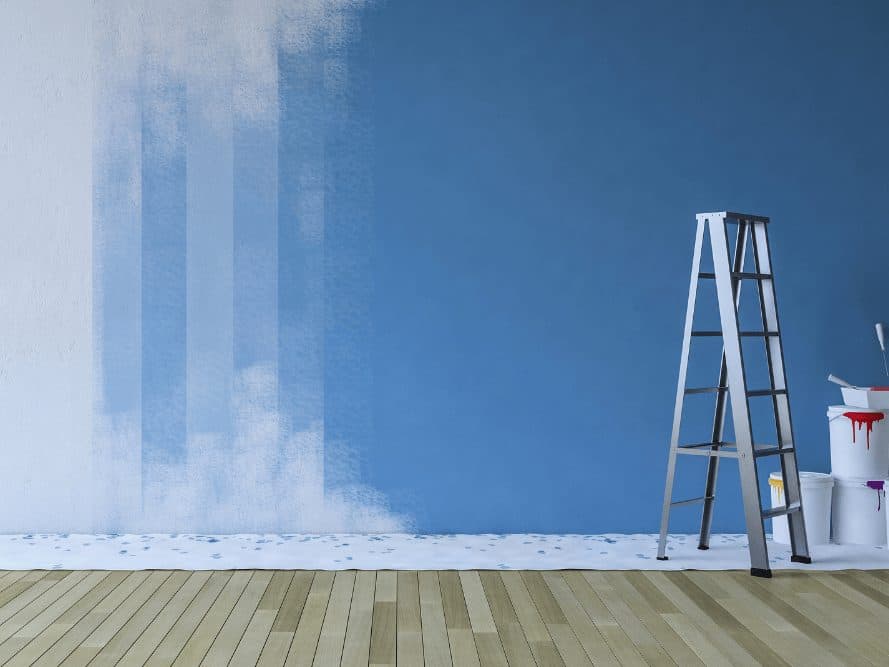
On this page
- Wall painting services in Dubai: what we cover
- What your wall is made of, and what it needs
- Wall problems and how we fix them
- Painting a wall step by step
- Feature walls, textures and decorative finishes
- Choosing a finish and a colour for a wall
- Exterior and boundary wall painting
- How long a wall painting job takes
- Wall painting cost in Dubai and how to read a quote
- When a wall needs repainting, and when a touch-up is enough
- How to choose a wall painting company in Dubai
- Wall painting Dubai: where we work
- How to get a wall painting quote
- Frequently asked questions about wall painting in Dubai
This page covers what our wall painting services in Dubai include, how different wall types behave, which wall problems we repair and how, how a wall is painted step by step, what feature walls and decorative finishes involve, how to choose a finish, how long a job takes, what it costs and how to compare quotes. If you want to plan a whole home or a single apartment instead, our house painting page and apartment painting page cover those. If you would rather cover a feature wall than paint it, see wallpaper installation in Dubai.
The quickest way to start is to send photos of the wall on WhatsApp at +971 55 209 9785. Some walls we can price from photos, and others need a visit. A site inspection costs AED 100.
Wall painting services in Dubai: what we cover
We offer wall painting in Dubai as a single wall, a group of walls or the whole interior, and as a repair-only job when you want to fix the wall and paint it yourself later. The table lists the main wall jobs and who usually books each one.
| Job | What it covers | Who usually asks |
|---|---|---|
| Single wall or feature wall | One wall, an accent wall, a wall behind a bed, a sofa or a TV | Residents changing the look of one room |
| Several walls | A living room, a hallway, a stairwell | Owners with one worn area |
| All interior walls | Every wall in an apartment, house or villa | Owners and tenants repainting a home |
| Wall repair before painting | Cracks, hollow plaster, damp, nail holes, stains | Anyone whose paint is peeling or marked |
| Decorative and textured walls | Stucco, metallic effects, microcement-style finishes, faux and illusion finishes | Owners who want more than flat colour |
| Exterior and boundary walls | Facade walls, boundary walls, parapets | Villa and townhouse owners |
| Commercial walls | Offices, shops and warehouses | Businesses |
| Touch-up and maintenance | Scuffs, marks and small repairs | Owners who want to keep the finish between repaints |
The same team that quotes your wall paints it. We employ our own painters and do not subcontract the painting.
We also offer a colour consultation. A wall that looks right on a card can look different in your light, so we paint a sample patch on the wall before you commit.
What your wall is made of, and what it needs
Not every wall in Dubai is the same. The surface decides what we repair, which primer we use and how the paint will wear. We identify the wall type at the inspection, and it is the first thing a careful painter checks.
| Wall type | What it is | What it needs |
|---|---|---|
| Plaster on block or concrete | The most common wall in apartments and villas | Cracks filled, hollow patches repaired, sanding, primer, two coats |
| Drywall or gypsum board | Partitions, bulkheads, false ceilings | Joints and screw heads filled and sanded, a sealer, two coats |
| Bare concrete | Parapets, some feature walls, new builds | A sealer or primer made for masonry, then topcoat |
| Previously painted wall | A wall already painted once or more | Cleaning, sanding, spot repair, primer on patches |
| Textured or decorative wall | Stucco, relief, sprayed or troweled finishes | Assessment first: some can be painted over, some need to be removed |
| Wall with wallpaper | A wall with paper or a paper residue | Paper removed, glue cleaned, wall repaired and sealed |
| Exterior wall | Facade and boundary wall | Washing, crack and joint repair, exterior primer, weather-resistant coating |
Plaster on block or concrete
This is the wall in most Dubai apartments and villas. It takes paint well when it is sound and dry. Problems appear where the plaster has separated from the block behind it, which sounds hollow when you tap it, and where moisture comes through. We tap and test during the inspection.
Drywall and gypsum
Drywall is common in partitions, bulkheads and false ceilings. It is light and smooth, but the joints and screw heads show through thin paint if they are not filled and sanded properly. The paper face also absorbs paint unevenly, so a sealer goes on first. Drywall damaged by water must be replaced, not painted.
Bare concrete and new plaster
New plaster and concrete are alkaline and need time to dry before painting. They also need a primer or sealer that suits the surface, or the topcoat can peel or show patches. If your wall is new, tell us how long ago it was finished.
Already painted walls
Most repaints are on walls that already have paint. We check whether the old paint is sound. Paint that is flaking, powdery or chalky must be removed or sealed, because new paint fails when it is applied over a surface that is itself failing. A simple test is to rub a dry hand over the wall: if chalky powder comes off, the old paint is breaking down.
Textured and decorative walls
Some textured walls can be painted over with a suitable coating. Others, such as heavy relief or damaged texture, are better removed or skimmed smooth. We assess at the inspection, and the quote says which. See the decorative finishes section for more.
Walls with wallpaper
Painting over wallpaper is a common cause of bubbling and peeling. We remove the paper, clean off the glue, repair the wall and seal it before painting. If the paper is a feature you want to keep, we advise you not to paint it.
Wall problems and how we fix them
A wall problem you can see is a wall problem we fix. Painting over a defect hides it for a few weeks at best. This section covers the common wall problems and what we do about each.
Cracks
| Type of crack | What it usually means | What we do |
|---|---|---|
| Fine hairline cracks | Surface shrinkage or movement in the plaster | Open slightly, fill with a flexible filler, sand, prime |
| Cracks at corners and along ceilings | Movement between wall and ceiling | Flexible filler or tape and compound, so the joint can move |
| Wide or growing cracks | Structural movement or settlement | We recommend a building professional looks at it before we paint |
| Cracks around windows and doors | Frames moving or lintel stress | Fill, sand and prime, then paint with a flexible coating outside |
A crack that returns after repainting is a sign the cause was not fixed. If we find a crack that is wide, stepped or growing, we tell you and advise you to have it assessed. We do not paint over it and pretend it is cosmetic.
Hollow plaster
Hollow plaster has separated from the wall behind it, and sounds drummy when tapped. Paint on hollow plaster cracks and falls away with it. We cut back the loose plaster, patch it and prime the repair.
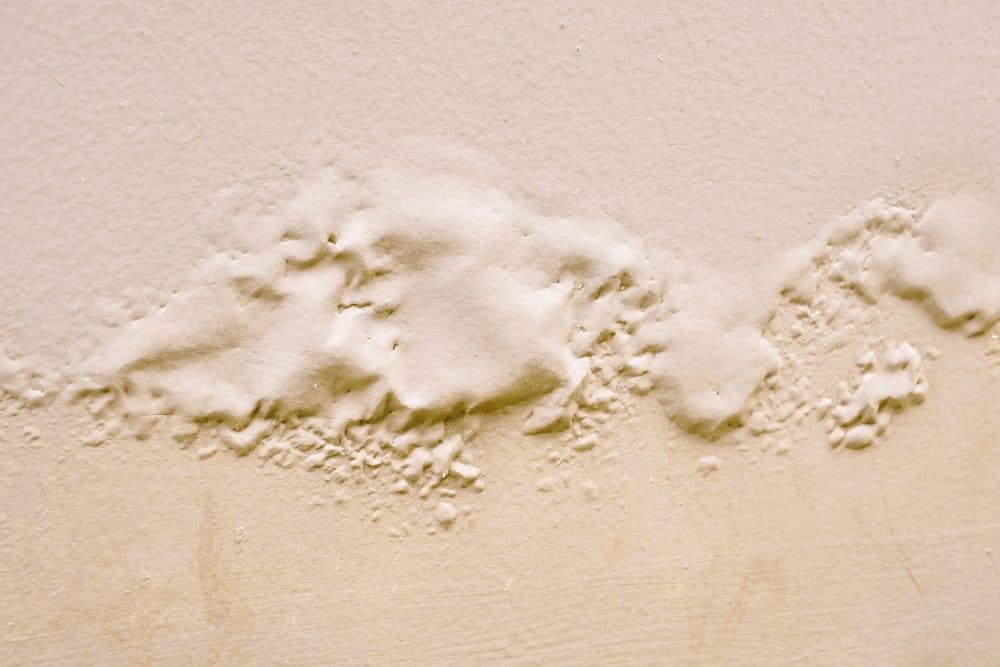
Peeling, flaking and blistering paint
Paint peels when it cannot grip the surface. The usual causes are damp, dust or grease under the paint, a poor primer, or paint applied too thickly or in unsuitable conditions. We scrape back to a sound edge, find the cause, repair, prime and repaint. Peeling that comes back in the same place points to moisture behind the wall.
Damp and efflorescence
Efflorescence is a white powdery salt deposit on the wall, left behind when moisture moves through masonry and evaporates. It means the wall is getting wet from somewhere: a leak, a plant bed against an outside wall, a failed bathroom seal, condensation or rising damp. We brush the salts off, but they come back until the moisture is stopped.
If the cause is a leak or a failed wet area, we fix or waterproof it first, because no paint will hold against constant moisture. We tell you what we find during the inspection, and the quote lists the repair separately from the painting.
Mould
Mould appears on walls that stay damp and badly ventilated, most often in bathrooms, behind wardrobes and on cold external walls. We treat the mould with a suitable cleaner, let the wall dry, and use an anti-mould or moisture-resistant paint. We also check the ventilation, because without it the mould comes back.
Nail holes, screw holes and dents
Small holes from pictures, shelves and TV brackets are filled, sanded smooth and primed. Larger holes from wall-mounted TVs or fittings are patched with filler and mesh or board, depending on the size.
Stains: water, smoke, grease and marker
Stains bleed through ordinary paint. Water stains, smoke, grease and marker need a stain-blocking primer. In kitchens we degrease the wall first, because paint does not stick to grease.
Uneven or damaged surfaces
Walls with a rough or patchy surface show every flaw once painted, especially in side light. A skim coat of putty and careful sanding gives a smooth base. If your wall is very uneven, we tell you whether a skim coat or a texture finish is the better route. Our plastering services page explains what a skim coat is and what it cannot fix.
Painting a wall step by step
If you are wondering how to paint a wall properly, the answer is that the painting is the last third of the job. These painting wall tips are the order we follow on every wall, and the order is the same whether you hire a crew or do the work yourself.
Step 1: Inspect and plan. We check the wall type, tap for hollow areas, look for damp and cracks, measure the area and agree the colour and finish.
Step 2: Protect. Floors, windows, sockets, fittings and fixed furniture are covered or masked. Movable furniture is gathered and covered.
Step 3: Clean. Dust, grease and loose material are removed. Grease and mould are treated before anything else.
Step 4: Repair. Cracks are opened and filled, hollow plaster is cut back and patched, holes are filled and nail pops are dealt with.
Step 5: Sand. Repairs and rough areas are sanded smooth, and the dust is cleaned off.
Step 6: Prime or seal. Patches, new plaster, stains and bare surfaces get a primer or sealer, so the topcoat dries evenly and holds.
Step 7: Paint. Most walls need two topcoats, with drying time between them. We cut in along corners and ceilings first, then roll the open wall, and keep a wet edge so there are no lap marks.
Step 8: Snag and hand over. We walk the wall with you with a light held flat against it, correct what we find and clear up. The one-year workmanship warranty starts at handover.
Why two coats
A single coat looks patchy because the paint is thinner at the edges and the colour of the wall below shows through. Two coats give an even colour and a durable film. A dark-to-light colour change can need a third.
Keep a wet edge
Rolling a wall in sections that dry before the next is joined leaves visible lines. Painters work in manageable sections from top to bottom and keep the edge wet, which is also why large walls are best painted in one session.
Feature walls, textures and decorative finishes
A feature wall is one of the cheapest ways to change how a room feels, because only one wall needs new paint. Decorative finishes take it further, and need more preparation and a different skill.
Accent and feature walls
An accent wall works best on the wall you see first from the door, or the one behind a bed, a sofa or a TV. A colour one to three shades deeper than the other walls adds depth. A strong contrast adds drama, and is worth testing with a sample patch before you commit. Dark colours need extra coats, which we state in the quote.
Decorative finishes we apply
| Finish | What it looks like | What it involves |
|---|---|---|
| Stucco | A soft, layered, plaster-like surface | Applied by trowel in layers, sealed afterward |
| Metallic effect | A shimmer in silver, gold, copper or bronze tones | Applied over a smooth, primed base, and shows flaws underneath |
| Microcement-style finish | A smooth, concrete-like look | Applied in thin layers, and needs a very well-prepared wall |
| Textured relief | Raised, patterned or wave-like surfaces | Applied by trowel, roller or spray, then painted |
| Faux and illusion finishes | Marble, stone or wood effect, and trompe l'oeil | Painted by hand in layers, and each is individual work |
| Stencil and pattern | Repeated patterns, borders and shapes | Applied with stencils, and suits small areas |
Decorative finishes are priced separately from flat colour because they take more time and a different skill. We quote them after inspection, and we show a sample on a board or a small area when that makes the decision easier.
Preparation matters more for decorative work
Gloss, metallic and microcement finishes show every flaw in the wall under them. That is why a decorative wall is prepared more carefully than a flat-painted one, with filling, skimming and sanding before the finish goes on. If the wall is uneven, we tell you at the inspection and price the preparation.
Look after a decorative wall
- Dust textured walls with a soft brush or a vacuum with a brush head, not a wet cloth.
- Clean metallic and smooth finishes with a soft damp cloth. Abrasive cleaners mark them.
- Keep furniture and sharp objects from rubbing against stucco and relief.
- Ask us for the cleaning instructions for the product used, and we give them at handover.
Painting over an existing texture
If a wall already has a texture you dislike, we assess whether it can be painted over, skimmed smooth or removed. Light textures can often be skimmed. Heavy relief may need removal. The quote explains which route we recommend.
Choosing a finish and a colour for a wall
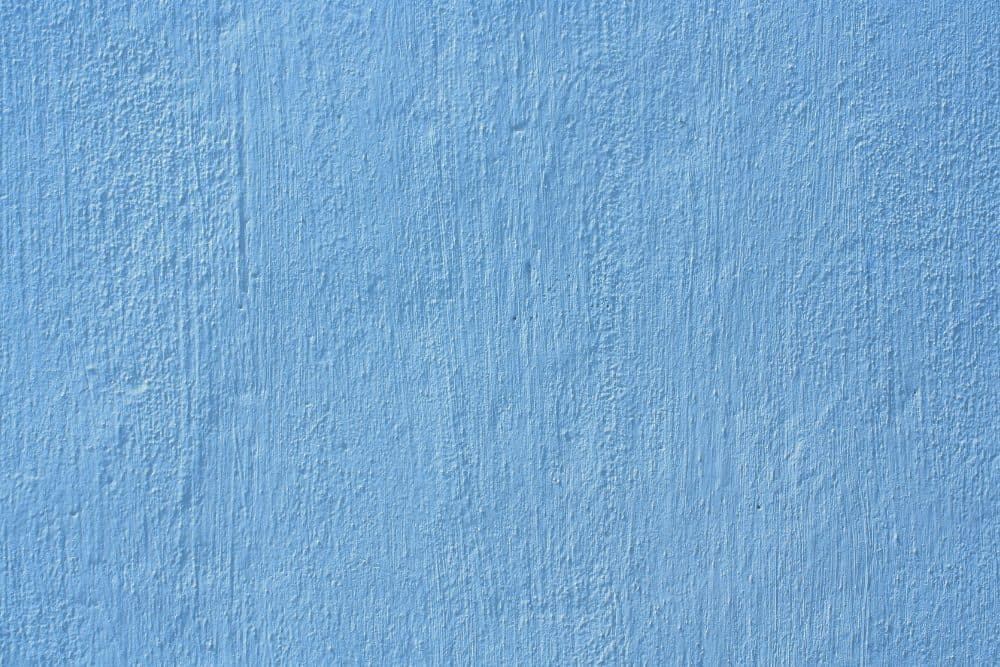
The finish decides how the wall looks, how it wears and how easy it is to clean. The colour decides how the room feels. Both are worth choosing with the real wall in front of you.
Matt, satin and gloss
| Finish | Look | Best for | Trade-off |
|---|---|---|---|
| Matt | Flat, no shine | Living rooms, bedrooms | Hides flaws, marks more easily unless it is a washable matt |
| Satin or low sheen | Soft glow | Kitchens, hallways, children's rooms | Easier to wipe, shows more flaws |
| Semi-gloss | Clear shine | Doors, frames, skirting | Very washable, shows every flaw |
| Gloss | High shine | Woodwork, metal | Needs perfect preparation |
Light changes colour
Strong daylight can lighten a mid-tone and make a cool grey look colder. Evening light changes it again. We paint a sample patch and suggest you look at it in the morning, at midday and in the evening.
Size and colour
Light colours make a small room feel larger and show marks sooner, which is why a washable finish matters. Dark colours hide marks but take more coats to cover and more to cover again later. If you want a dark colour, one wall is a good place to start.
Sun and fading
Walls that take direct sun fade sooner than walls in shade. Strong, saturated colours fade fastest. For a wall by a large window, ask us for a product line with good colour retention.
Brands and product lines
We work with the main brands sold in Dubai, including Jotun, National Paints and Dulux, or a brand you prefer. The brand matters less than the product line within it. A quote that names the exact product tells you more than one that says "premium paint".
Exterior and boundary wall painting
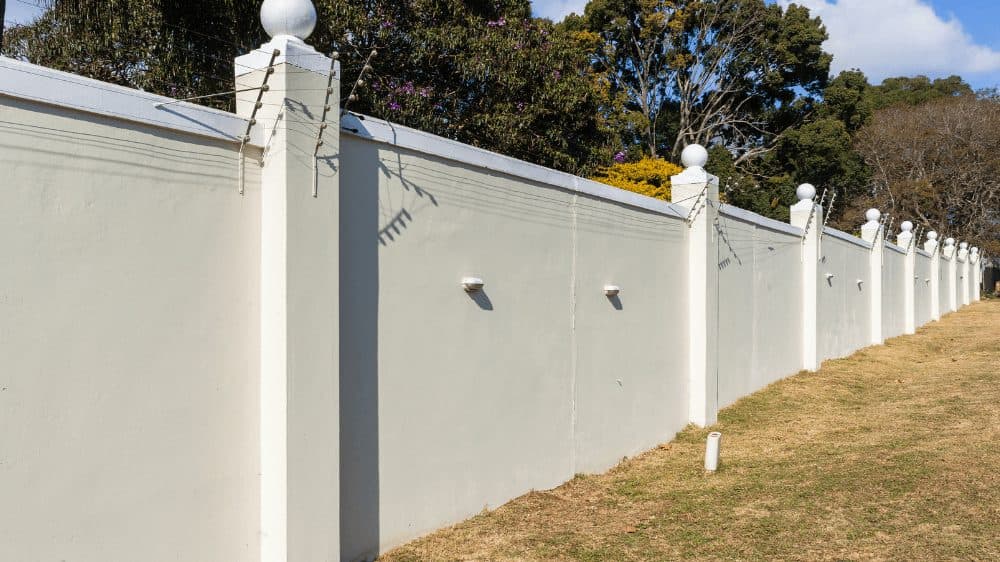
Exterior walls face sun, dust, heat and, in some areas, humid air and sea salt. They need a different coating and different preparation from interior walls. We paint facade walls, boundary walls and parapets, and the villa painting page covers these jobs in detail.
What changes outside
- Washing first. Dust and dirt are washed off, because paint does not grip dirt.
- Crack and joint repair. Exterior cracks and joints are filled with a flexible material that moves with the wall.
- Exterior primer. The wall is primed with a product made for masonry outdoors.
- Weather-resistant coating. We use exterior-grade paint, applied in the conditions the manufacturer sets.
- Access. High walls need ladders, platforms or scaffolding, and the quote says which.
Paint manufacturers set a temperature range for application, and we follow it. We may reschedule days that are unsuitable.
Boundary walls and gates
Boundary walls get the most sun and the least attention, and they fade first. We repair cracks and damaged coping, paint the wall and, if you want, the gate and railings in the same visit.
Community approval
Some villa communities require approval before you change the exterior colour. Check with your community management before you choose a colour, and we help you prepare the request.
How long a wall painting job takes
A wall job is shorter than people expect, and the repair work decides most of the time. Typical durations for walls in normal condition:
| Job | Typical duration |
|---|---|
| One feature wall | Up to 1 day |
| Several walls in one room | 1 day |
| A full room | 1 day |
| A 1-bedroom apartment, all walls | 1–2 days |
| A 2-bedroom apartment, all walls | 2–3 days |
| A 3-bedroom apartment, all walls | 3–4 days |
| A villa, all interior walls | 5–8 days |
| Decorative finishes | Quoted after inspection |
What adds time
- Repairs. Many cracks, hollow areas or damp take days before any paint goes on.
- Drying. Primers and coats need drying time. We do not rush it.
- Colour change. Dark to light takes extra coats.
- Textured and decorative work. Each layer dries before the next.
- Access. High walls need setup time.
- Building rules. Permits, lift booking and working hours limit what can be done each day.
We follow the working-hour rules of your building or community. Where weekends or evenings are allowed and approved, we can use them to shorten the schedule.
Wall painting cost in Dubai and how to read a quote
Wall painting in Dubai is priced by the wall area, the condition of the wall, the finish and the access. A low quote can cover two coats of basic emulsion on a sound wall, and a high one can add repairs, a skim coat and a premium finish. Those are different jobs, so compare what each includes before you compare the numbers.
How wall area is measured
Painters measure wall area in square metres. For a wall, multiply the width by the height, and subtract large openings such as doors and windows. One square metre is about 10.76 square feet, which helps when a rate is quoted in the other unit.
Some painters measure floor area instead, and the figures are not comparable. Wall area is usually more than twice the floor area of a room, so a rate per square foot of floor and a rate per square foot of wall describe different jobs.
Our indicative prices
These are starting guides for walls in normal condition. The written quote after the inspection is the one that settles the price.
| Wall painting job | Indicative price |
|---|---|
| Interior walls, per square metre of wall area | From about AED 5 |
| Minimum job (a single room, or a single wall) | From AED 270 |
| Full apartment interior, walls and ceilings | See our apartment painting prices |
| Full house or villa interior | See our house painting prices |
| Wall repair before painting | Quoted after inspection |
| Decorative and textured finishes | Quoted after inspection |
| Exterior and boundary walls | Quoted after inspection |
Prices are shown before 5% VAT. They cover the paint, normal preparation materials, covering of floors and furniture, and the clean-up. Repairs beyond normal preparation, such as cracks that need opening, hollow plaster, damp treatment and skim coats, are priced separately once we have seen the wall.
What moves the price
- Wall area. More area, more paint and more time.
- Condition. Many cracks, patches and stains take longer than a sound wall.
- Colour change. Going from a dark shade to white needs extra coats on a wall.
- Finish. Washable, anti-mould and premium ranges cost more than basic emulsion.
- Texture and decoration. Priced separately and by the area.
- Height and access. High walls and stairwells need equipment.
- Timing. Evening work and short deadlines usually cost more.
- Building rules. Permits and restricted hours add time.
Read a wall painting quote line by line
| Check | Why it matters |
|---|---|
| Wall or floor area, and the measured figure | A low rate on a large wall is still a large price |
| Walls listed, with ceilings and woodwork shown separately | Shows what is and is not covered |
| Repairs listed separately from painting | Shows whether cracks and damp are dealt with |
| Number of coats | Two coats is normal for a sound wall |
| Primer or sealer named | A missing primer is a warning sign |
| Named primer and paint, not just "premium" | The product line sets durability |
| Clean-up and furniture covering | Often added later as an extra |
| VAT shown separately | Five per cent adds up on a whole-interior quote |
| Payment schedule | A big deposit before any wall is touched is a warning sign |
| Warranty in writing | A spoken promise is hard to enforce |
A wall quote far below the others may have left out the repair or the primer. Ask each company what it includes, and compare like with like.
When a wall needs repainting, and when a touch-up is enough
Not every mark means a full repaint. A touch-up is cheaper and quicker when the damage is small and the paint is still sound.
Signs a wall needs a full repaint
- Fading across the wall. Sun has bleached the colour, so a patch would show.
- Widespread scuffs and stains that no longer wipe off. The finish has worn through.
- Flaking or peeling in several places. The paint has lost grip.
- Many cracks. Repairing them leaves a patchy wall, and a repaint finishes the job.
- Mould or damp marks. The cause has to be dealt with, then the wall repainted.
- A colour you no longer like. That is reason enough.
When a touch-up is enough
- A few small marks or scuffs.
- Nail or screw holes that have been filled.
- A small area repaired after a leak or a patch.
The catch with touch-ups is the match. New paint on an old wall can look different if the old paint has faded. If the touch-up is on a visible wall, we paint to a natural break such as a corner, so a small difference does not show as a patch.
Annual maintenance
If you would rather keep the finish in good shape than repaint every few years, we offer annual maintenance: a scheduled inspection, touch-ups and notes on what needs attention. Ask us about it when you request your quote.
How to choose a wall painting company in Dubai
Anyone can offer a wall painting service in Dubai; the useful question is what they will do about your wall. The best wall painting services in Dubai for your wall are the ones that can tell you what is wrong with it, put the repair and the painting in writing and show you how they will prepare it. Use this checklist when you compare wall painters, including us.
- Check the company. Ask for the trade licence, and check that the company name on it matches the quote.
- Ask who will be on your wall. Some contractors take the booking and hand the job to others. Ask whether the painters are employees, and meet the supervisor.
- Ask what they do about repairs. Cracks, hollow plaster and damp should be repaired, not painted over.
- Ask for the wall type to be named. A good painter says whether your wall is plaster, drywall or concrete, and what that changes.
- Ask for the primer and the paint by name. A named product line tells you what is going on the wall; "premium" does not.
- Ask for a sample patch. A colour can change on your wall under your own lights, so look at it there.
- Ask about decorative work. If you want a textured or metallic wall, ask to see a sample of that finish.
- Check the payment schedule. A small deposit, a stage payment and a final payment after the snagging walk is fair; full payment up front is not.
- Ask about the warranty. Ours is a one-year workmanship warranty, with the terms in writing on request.
- Ask to see finished walls. A reference you can call or visit is more useful than a gallery of photos.
If you are looking for the best house wall painting Dubai has to offer, the answer is the company that can answer these questions plainly before any money changes hands. Send each company the same photos and the same list of walls, so you compare like with like.
A wall painting company in Dubai, a wall painting service Dubai homeowners can call or walls painting services in Dubai all describe the same trade. Titles such as top-rated, top professional or best luxury wall painting are claims, not tests. Ask for the written scope, the preparation, the paint brand and finish, and photos of similar walls: the best wall painting experts show their work in edges, corners and light.
Wall painting Dubai: where we work
We offer wall painting services Dubai-wide, in every area and community. That includes Al Barsha, Al Nahda, Al Quoz, Arabian Ranches, Bur Dubai, Business Bay, Damac Hills, Deira, Discovery Gardens, Downtown Dubai, Dubai Hills, Dubai Marina, Dubai Silicon Oasis, Dubai South, Dubai Sports City, Emirates Hills, International City, Jumeirah, Jumeirah Village Circle, JLT, Mirdif, Motor City, Mudon, Palm Jumeirah and Town Square. If your area is not listed, we cover it too.
If you searched for Dubai wall painting services near you, the answer is the same wherever your wall is: send us the location and photos on WhatsApp, and we tell you when a supervisor can visit.
Many buildings and communities have rules on working hours, lift booking, parking and noise. Tell us the building or community when you contact us, and we plan around its rules.
How to get a wall painting quote
Tell us about the wall before we visit. Message +971 55 209 9785 with:
- The area and building or community, and whether the property is occupied or empty.
- Photos of each wall, including cracks, stains, peeling, damp and any texture.
- The approximate size: the width and height of the wall, or the number of rooms.
- What you want: a single wall, several walls or the whole interior, plus any decorative finish.
- The wall type if you know it: plaster, drywall, concrete or wallpaper.
- Your preferred dates, and any deadline such as a move-in or a handover.
- Building rules: working hours, lift booking, permit requirements.
We reply with what the photos let us price and what needs a visit. The inspection costs AED 100. The written quote that follows lists the walls, the repairs, the paint product line, the price before VAT, the schedule and the warranty terms.
Keep reading
Frequently asked questions about wall painting in Dubai
How much does wall painting cost in Dubai?
The price follows the wall area, condition, finish and access. Our indicative interior price starts from about AED 5 per square metre of wall, with a minimum job from AED 270, before 5% VAT. Repairs and decorative finishes are quoted after inspection. The written quote is the figure that applies.
Can you paint just one wall?
Yes. We paint a single feature or accent wall as a standalone job, with a minimum job from AED 270. Tell us which wall, and send a photo and the size.
Do you repair cracks and damaged walls before painting?
Yes. We fill cracks, repair hollow plaster, patch holes and treat stains and mould before any paint goes on. If a crack is wide, stepped or growing, we tell you and advise you to have it assessed first.
Why is my paint peeling?
Paint peels when it cannot grip. The cause is usually damp behind the wall, dust or grease left on the surface, a poor primer, or unsuitable conditions on the day it was applied. If the peeling returns in the same spot, suspect moisture. We trace the cause first, then repair, prime and repaint.
Can you paint over wallpaper?
We do not recommend it, because paper can bubble and peel under paint. We remove the paper, clean off the glue, repair and seal the wall, then paint.
Do you paint drywall, gypsum and concrete walls?
Yes. We paint plaster on block or concrete, drywall and gypsum, bare concrete, and previously painted walls. Each needs different preparation, and we explain which at the inspection.
Do you do textured and decorative walls?
Yes. We apply stucco, metallic effects, microcement-style finishes, textured relief, faux and illusion finishes, and stencils. They are priced separately and quoted after inspection.
Can you paint exterior and boundary walls?
Yes. We paint facade walls, boundary walls and parapets with exterior-grade coatings. Our villa painting page covers exterior jobs in more detail.
Do you treat damp and mould before painting?
Yes, and the moisture comes first. Mould is treated and the wall left to dry before an anti-mould or moisture-resistant paint goes on. If a leak or a failed wet area is behind it, we repair or waterproof that first, because paint does not hold on a wall that keeps getting wet.
Do you work weekends or evenings?
Where your building or community allows and approves it, yes. Fixed working hours apply in some, and we follow them. Give us your deadline and we will plan the days around it.
Do you do painting contracting and wall painting in Dubai?
We handle wall painting for homes and commercial spaces on a written scope and schedule. Send photos or plans for a quote.
Get a quote for wall painting
Tell us what you need, or send photos on WhatsApp. A site inspection costs AED 100, and you get a written quote after the visit.
- +971 55 209 9785
- info@dubairepairpro.com