Interior Painting Services in Dubai: Finishes, Prep and Colour, Room by Room
Dubai Repair Pro is a Dubai LLC with its own team of painters, and we offer interior painting services in Dubai for apartments, villas and townhouses. This page is about the inside of the home: the walls, ceilings, trim and doors, what goes on each surface, and why the right finish in a kitchen is the wrong finish in a bedroom.
Last updated: 16 October 2026
On this page
- Interior painting services in Dubai: what we paint indoors
- What interior painting includes, and where it stops
- Choosing a finish: matt, satin, semi-gloss and gloss
- Room by room: what goes where
- Ceilings, cornices, skirting and doors
- Wall preparation: what we do before the paint
- Colour and light in Dubai homes
- The order of work and how long each step takes
- Living at home during an interior paint job
- Paint brands and what goes on your wall
- Interior painting cost in Dubai
- How to choose an interior painter
- Interior painting Dubai: where we work
- How an interior painting quote works
- Frequently asked questions about interior painting in Dubai
Most interior painting problems start before the first coat. A finish that marks when wiped, a patch that shows through two coats, a colour that looks different at night: each has a cause you can check and a fix you can specify. We cover the finishes, the room-by-room choices, the preparation, the effect of Dubai light on colour, the order of work, the cost and the questions to ask any painter. For accent walls and feature art, see specialty painting, and for textured or patterned walls, wallpaper installation.
If you are choosing by property type instead, our guides to apartment painting and house painting cover access, building rules and timings for each. To start now, send photos of the rooms on WhatsApp at +971 55 209 9785. A site inspection costs AED 100.
Interior painting services in Dubai: what we paint indoors
We paint every interior surface that takes paint, including decorative interior painting in Dubai homes such as an accent wall, a two-tone hallway or a textured finish. The table lists the jobs and what each one involves.
| Surface | What the work involves | Typical finish |
|---|---|---|
| Walls | Preparation, primer where needed, two coats | Matt or satin |
| Ceilings | Cutting in at the edges, rolling in one direction, two coats | Flat matt |
| Skirting boards and cornices | Sanding, filling, brushed finish | Satin or semi-gloss |
| Doors and door frames | Sanding, primer, brushed or sprayed coats | Satin or semi-gloss |
| Cupboards and wardrobes | Degreasing, keying the surface, primer, two coats | Satin |
| Feature walls and two-tone walls | Taped lines, a second colour, sample patch first | As the room |
| Bathrooms and kitchens | Cleaning, mould treatment, moisture-resistant paint | Satin or semi-gloss |
Interior house painting and interior home painting are the same trade as the work above, whether the property is a studio or a six-bedroom villa. The size changes the schedule and the access. The method on each wall stays the same.
The same crew that comes to the inspection paints the job. Our interior painters are our own employees, and we do not subcontract.
Home interior painting is our daily work, from a single room to a whole villa. Interior painting for villas in Dubai adds height, size and access to the same job, and decorative interior painting covers textures, feature walls and special finishes. The best interior painting in Dubai comes from the preparation, not from the colour.
What interior painting includes, and where it stops
A standard interior painting job includes covering floors and furniture, washing or degreasing where the wall needs it, filling small cracks and nail holes, sanding the filled areas, priming patches, two coats of paint on every surface in the quote and clearing up. It is a complete repaint of surfaces that are sound.
It does not include repairs beyond normal preparation. A hairline crack and a hole from a wall bracket are preparation. A section of damaged plaster, a wall that has been wet for months or a ceiling stain with an active leak behind it are repairs, and they are quoted as a separate line once we have seen them. Our plastering services page covers plaster repair and skim coats.
Here is the line we draw:
- Preparation (in the price): washing, light sanding, filling hairline cracks, filling small holes, spot priming, masking and covering.
- Repair (a separate line): replastering, re-skimming a large area, cutting out and patching damaged boards, treating a wall with an active leak, removing wallpaper, removing heavy textured coatings.
- Not painting work: plumbing, electrical, AC repairs and joinery. We mark where one of these must be fixed first and tell you before we start, so paint does not go over a problem that will return.
Putting this in writing is what makes quotes comparable. When two quotes for the same flat differ by 40%, the cheaper one often leaves out the preparation the other one lists.
Choosing a finish: matt, satin, semi-gloss and gloss
The finish, also called sheen, is how much light the dry paint reflects. It changes how the wall looks, how it hides flaws and how well it survives a wet cloth. The same colour in matt and in satin can look like two different colours.
| Finish | Look | Hides flaws | Wipes clean | Where it works |
|---|---|---|---|---|
| Flat matt | No shine | Best | Poorly | Ceilings, adult bedrooms, rooms with imperfect walls |
| Matt | Very soft | Well | Fairly | Living rooms, dining rooms, bedrooms |
| Satin (eggshell) | A soft glow | Moderately | Well | Hallways, kitchens, children's rooms, family bathrooms |
| Semi-gloss | Clearly shiny | Poorly | Very well | Doors, skirting, frames, kitchen cupboards, wet areas |
| Gloss | Mirror-like | Worst | Best | Small details, furniture, decorative trim |
How to decide
Two questions settle most choices. How often will someone wipe this surface, and how good is the wall underneath?
A hallway that children touch every day needs a finish that wipes clean, so satin. A bedroom wall that nobody touches can be matt, which looks richer and forgives a wall that is not perfectly flat. If the wall has ripples, filled cracks or old roller marks, go flatter: shine highlights every ridge, especially when light comes in sideways from a window or a spotlight.
Why the same paint looks different on a big wall
Sheen shows up more on a large wall than on the colour card in your hand. A satin that looks calm on a 5 cm chip can look glossy on a 4 m wall in the afternoon sun. Ask for the sample patch on the actual wall, in the finish you plan to use, and look at it in the morning, at midday and with the lights on in the evening.
Finish names differ between brands
The finish names are not standard across brands. One brand's "silk" is another brand's "satin", and the sheen level in the product's technical data sheet is a better guide than the name. Where a quote says only "emulsion", ask which product line and which finish.
Room by room: what goes where
Rooms differ in four ways that matter to paint: moisture, grease, how much the walls are touched and how much light falls on them. Here is how those four play out in each room.
Living room and dining room
These are the rooms people look at most, so they reward a good preparation. Use matt or a low-sheen finish for walls, which hides small flaws and gives colour its depth. Living rooms in towers often have a full-height window wall that throws light across the other walls, so a flatter finish helps hide any slight roughness. If you use a feature wall behind the television or sofa, paint it in the same finish as the rest so the light does not split the room into two surfaces.
Dining rooms get splashes and handprints around the table. Satin below chair-rail height, or satin on the whole room if you have young children, gives you a wall you can wipe.
Bedrooms
Matt walls, flat matt ceiling. Bedrooms are the most forgiving room for colour because you see them in low light and mostly at rest. The common mistake is choosing a dark colour from a card in the shop and then finding that it feels smaller and cooler at night. A muted mid-tone usually works better than a very dark or very bright one.
A built-in wardrobe that matches the walls is a simple way to make a small bedroom feel larger. Painting the wardrobe doors in satin gives a wipeable surface with no visible grain.
Children's rooms
Satin on the walls up to hand height, which is the area children touch, and matt above if you like. Scuffs wipe off satin with a damp cloth, and crayon usually wipes off more easily than from matt. Ask for a paint described as washable or scrubbable, and for a low-odour option. Allow the room to air before the child sleeps in it again.
Kitchens
A kitchen asks more of paint than any other room. Steam, oil mist and fingerprints land on every surface, and the wall behind the hob collects grease that paint will not stick to. The preparation matters more than the paint.
- Degrease the walls and the ceiling with a suitable cleaner, rinse and allow them to dry.
- Sand lightly so the new paint has something to grip.
- Prime any bare patches or stained areas.
- Finish with satin or semi-gloss, which a cloth can clean.
Behind a hob, a tiled splashback is usually a better answer than paint, and we can quote that separately through our tiles work. When the whole kitchen is being renovated, paint is one stage among several, and our kitchen renovation page sets out the order.
Bathrooms
Bathrooms are the one room where moisture decides the paint. Humidity from showers settles on walls and ceilings, and paint that cannot cope will blister, peel or grow mould. We use a moisture-resistant, mould-resistant finish, usually satin or semi-gloss, and check that the extractor fan actually works before we paint. A fan that does not move air will beat any paint within a year.
If the bathroom already has black spots on the ceiling, the spots are mould, and painting over them without treatment only hides them for a few weeks. We wash the area with a mould-killing solution, let it dry, prime with a stain-blocking primer and then paint.
Corridors, stairs and entrances
These are the surfaces that get scuffed by bags, shoes, trolleys and shoulders. Use satin and think about the lowest 90 cm of the wall, where most damage lands. In a villa with a staircase, the stairwell is the one place where the cost is mostly access, because high walls need scaffolding or an extending tower. We include that in the quote.
Walls that face a balcony or a large window
A wall that sits in direct sun for hours fades faster, and the paint on it works harder. A wall behind curtains and blinds that stay closed all day does not. If the room has a strong sun-facing wall, pick a quality interior paint with good fade resistance and tell us about it so the quote names the right product.
Ceilings, cornices, skirting and doors
The surfaces around the walls decide whether a room looks finished.
Ceilings
Ceilings take flat matt paint. Flat matt shows the fewest flaws under overhead lights, and a ceiling is the surface where a light fitting, a spotlight or a window will highlight every roller mark. We paint the ceiling first, so any drips land on the surface we have not yet finished, and we work with the roller moving in one direction towards the light source so the join lines do not show.
White is the default for a reason: it bounces light back into the room. If you want a coloured ceiling, a very pale tint of the wall colour is safer than a bold shade, which lowers the ceiling visually and makes the room darker at night.
Water stains on a ceiling are a plumbing or AC question first and a painting question second. Find the source. A stain that returns after painting means the source is still active.
Cornices and coving
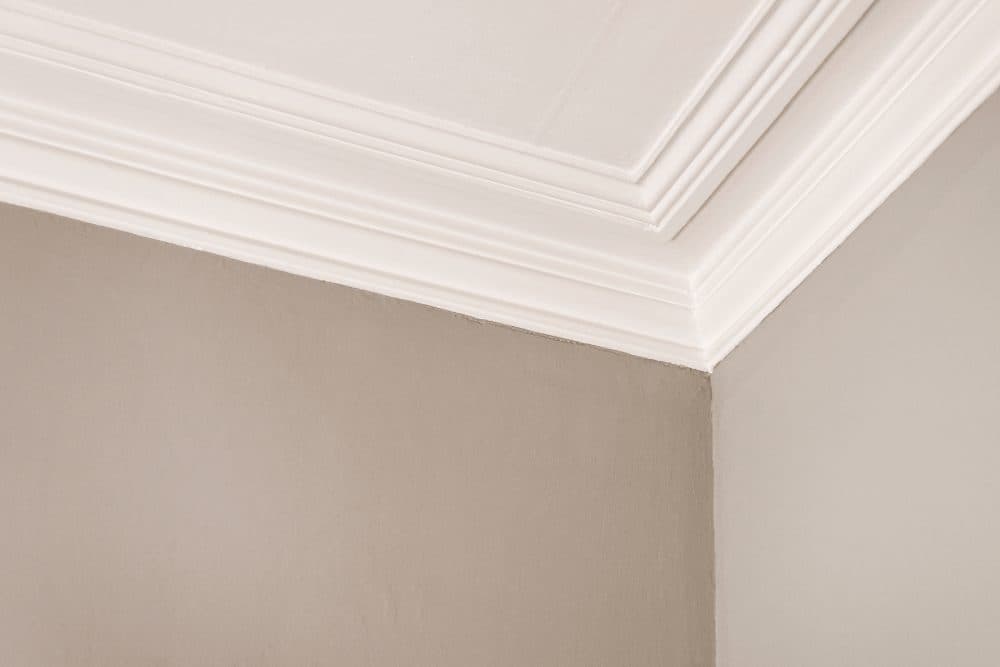
Plaster cornices collect dust and take paint unevenly if the dust is not removed first. We wipe them down, fill any hairline splits and paint them in the ceiling colour or in a slightly different white if you want them to show.
Skirting boards
Skirting takes the most knocks in the house. Satin or semi-gloss, brushed, after sanding and priming where the old finish has chipped. Masking the floor is the hard part, especially on marble or wood, and we do it with proper tape and covers rather than hoping for a steady hand.
Doors and frames
Painting a door well is slow work because paint has to dry between coats, and the surface is handled all day. The steps are:
- Remove or mask the handles and hinges.
- Sand the old surface until the shine is gone.
- Fill dents and dings.
- Prime if the door is bare or is changing from dark to light.
- Apply two thin coats of satin or semi-gloss, with light sanding between them.
- Hang the door open or on a rack while it cures, because a door that is closed too soon can stick to the frame.
Wooden doors that have been varnished need extra care: new paint will not hold on a glossy varnish unless the shine is removed first. A cheap-looking door painted in a hurry is usually a door that was not sanded.
Cupboards and wardrobes
Kitchen and wardrobe doors in laminate, MDF or thermofoil need the right primer, one made for slick surfaces, before any colour goes on. The wrong primer is why the paint peels at the edges a few months later. We degrease, key the surface, prime and paint in satin. Hardware is removed rather than masked, so the edges are clean.
Wall preparation: what we do before the paint
Good preparation is the part of the job you cannot see once it is finished, and it is the part that decides how long the paint lasts. A quote that lists preparation is a quote worth reading.
Cleaning
Dust, cooking grease and soot stop paint from bonding. We dust, wash or degrease as needed. In a kitchen, a bathroom or a room where people have smoked, washing is not optional.
Cracks
Hairline cracks are filled with a flexible filler, sanded flush and spot primed. A wider crack, or one that reopens after filling, usually means the building is moving or the plaster has been poorly finished. We fill it, mesh it if needed, and tell you if the crack looks structural. A structural question is for an engineer, and we say so rather than painting over it.
Holes and dents
Nail holes, screw holes and bracket holes are filled, sanded and spot primed. Bigger holes, such as where a TV bracket has been torn out, are patched with a filler suited to the depth. The sanding is what hides the patch: if the filled area stands proud of the wall, it will show through any colour.
Old paint and peeling
Loose or flaking paint is scraped back to a sound edge and sanded smooth. Paint over a flaking surface will flake too, taking the new coat with it. If a whole wall is peeling, we find out why before painting. Moisture behind the wall is a common reason.
Stains
Water marks, smoke, nicotine, grease, marker pen and rust all bleed through ordinary paint. A stain-blocking primer seals them. Two coats of colour over an unprimed stain often leave a ghost of the stain that shows up in some lights, so we prime first and tell you if we have.
Mould
Black or green spots on a wall or ceiling are mould. We treat the area with a fungicidal wash, let it dry, find and mention the source of the moisture, prime and paint with a mould-resistant finish. Without fixing the moisture, mould returns.
Damp
If a wall feels damp, has salt deposits or blisters, painting is the last step, not the first. The cause might be a leak, condensation, a failed waterproofing layer or an AC drain issue. We can point you to the likely source and quote our waterproofing work where that is the right answer. Paint cannot hold back water that is being pushed through a wall.
Wallpaper and textured walls
We paint over a sound, well-stuck wallpaper only when it is smooth and the join lines are flat, and we say plainly that the seams may show. Removing wallpaper is a repair line in the quote because the amount of work depends on how it was fixed. Textured walls are painted in the existing texture or skimmed flat first, depending on what you want. Skimming is a separate item.
Priming
A primer does one of four jobs: sealing bare plaster so it does not drink the paint, sticking to a slick surface, blocking a stain, or evening out a patched area so the patch and the wall dry to the same sheen. We use the primer the surface needs, not a primer on everything. A quote that says "primer on all walls" for a flat in good condition is charging for a step you may not need, and a quote that never mentions primer is guessing.
Colour and light in Dubai homes
The same paint looks different in a tower and in a villa, and in the morning and in the evening. Light is the biggest influence on colour that a colour card cannot show.
Daylight
Dubai gets strong, bright, high-angle sunlight for much of the year. A colour that looks warm in a showroom can look washed out in direct sun and heavy in shade. A north-facing room gets cooler, softer light and often needs a slightly warmer colour to feel comfortable. A sun-facing room does the opposite: a very warm colour can feel hot, and a pale cool one can look glaring.
Artificial light
Warm white LEDs make yellows and creams look richer and cool tones look muddy. Cool white LEDs make whites look crisp and warm colours look flat. If your bulbs are a particular colour, check the colour sample under them. Changing the bulbs after painting changes the colour of the room.
Going from dark to light, and light to dark
Covering a dark wall with a pale colour takes more coats than going the other way. Deep reds, navy and charcoal usually need a tinted primer or an extra coat so the old colour does not shadow through. We state the number of coats in the quote. If your current walls are dark and you are moving to white or a pale tone, expect a coat or two beyond the standard.
White is not one colour
Whites vary in undertone, from yellow-cream to blue-grey, and putting two whites side by side shows it. Skirting, doors and ceilings should be chosen together so the room does not look as if different batches were used. The sample patch is how you see this.
Sample patches
For any colour you are not sure about, we paint a patch of at least 50 cm by 50 cm on the actual wall. Look at it at three times of day and with the lights on in the evening. If you still like it after a full day, paint the room. If you do not, a patch costs us far less than a repainted wall costs you.
Feature walls
A feature wall works best on the wall you face as you enter the room or the wall behind the main piece of furniture. Choose one colour that works with the others instead of a colour at war with the floor and the sofa. We tape the edges, paint the feature wall last and remove the tape while the paint is still slightly soft so the line stays sharp.
The order of work and how long each step takes
A repaint follows a fixed order because each step protects the next. Here is the order we use, with what happens in each step.
| Step | What happens | Why it comes here |
|---|---|---|
| 1. Inspect and agree the colours | Walls checked, samples painted, quote written | Prevents mid-job changes |
| 2. Move and cover | Furniture moved to the centre and covered; floors covered; sockets masked | Protects your home |
| 3. Wash, fill and sand | Cleaning, cracks and holes filled, sanding | Gives the paint a surface to hold |
| 4. Prime | Primer on patches, stains, bare plaster, new fills | Stops patches showing |
| 5. Ceilings | Two coats | Drips fall on unfinished walls |
| 6. Walls | Two coats, cutting in then rolling | The main surface |
| 7. Doors, frames, skirting | Sanded, primed, two coats | Last, so the walls do not get marked |
| 8. Touch up and clean | Defects marked and corrected, tape removed, floors cleaned | Final finish |
| 9. Walk-through | We go round with you and note anything you want corrected | Agreement before we leave |
Drying and recoating
Most water-based interior paints are touch-dry in an hour or so, and can be recoated after a few hours, but the exact times are on the paint can, and they stretch in cooler or more humid conditions. We follow the can. Rushing the second coat is one of the main causes of streaks and peeling, and we will not do it to meet a schedule.
Typical durations
| Property | Typical duration |
|---|---|
| Single room | 1 day |
| Studio | 1 day |
| 1BHK | 1–2 days |
| 2BHK | 2–3 days |
| 3BHK | 3–4 days |
| 4BHK | 4–5 days |
| Townhouse | 3–6 days |
| Villa interior | 5–8 days |
These are our usual estimates for an empty or lightly furnished property in normal condition. A furnished home, many repairs, a colour change from dark to light, or a lot of doors and joinery adds time. The written quote gives the schedule for your job.
Living at home during an interior paint job
You can stay in the home during the work. A few preparations make the days easier.
- Clear what you can. Valuables, ornaments, loose items and anything fragile go into a room that is not being painted. We cover and move furniture, and we move light items, but we ask you to clear valuables.
- Pick a room to use. We work room by room where we can, so there is always a room that is not being painted.
- Plan for the smell. Water-based paints have a mild odour that fades in hours. Ventilate with windows open where the building allows, and keep the AC running on fresh air when you can. If someone in the home is sensitive to smells, ask for a low-odour option when you order the paint.
- Keep children and pets away. Wet paint, ladders, tape and tools are all hazards. We keep the working area closed off and tidy it at the end of every day.
- Wait before you hang and place. Paint feels dry long before it has hardened. Leave pictures, shelves and heavy furniture off the walls for a few days, and do not stand furniture against a wall that has just been painted until the paint can says it is cured.
- Check the walk-through. Look at each wall in daylight and with the lights on. Tell us about any area you want corrected before we leave, because a note on the day is quicker than a visit later.
If you would rather not be in the home at all, a day or two away speeds the job and keeps the air clearer. It is your choice.
Paint brands and what goes on your wall
We work with the main brands sold in Dubai, including Jotun, National Paints and Dulux, or a brand you prefer. The brand matters less than the product line within it. A premium line, a standard line and an economy line from the same brand differ in coverage, washability and how many coats you need.
Reading a product line
Four things tell you what a paint will do. The first is coverage, which is how much a litre will paint in one coat. The second is washability, meaning whether the dry film can be wiped and scrubbed without losing colour or sheen. The third is opacity, which is how well it hides what is under it. The fourth is odour, since some lines are made for low smell. The data sheet for each product states these, and the quote should name the product.
Low-odour paint
If you have children, a baby, someone with asthma or a home that you need to use quickly, ask for a low-odour option. We will name the product in the quote and tell you what the brand says about it. We do not claim a product is safe or non-toxic beyond what its data sheet says.
Matching an existing colour
If you want to match a colour already on the wall, we can ask a paint shop to scan it. A scan is close, not exact, and old paint fades, so a patch test on an inconspicuous part of the wall before painting is wise. A single wall that must match its neighbours is harder than repainting the whole room, and we say so in the quote.
Interior painting cost in Dubai
Interior painting is priced by wall area, condition, finish and access, and the quote that matters is the one written after an inspection. The table shows our indicative starting prices for interior walls and ceilings in normal condition.
| Job | Indicative price |
|---|---|
| Single room | From AED 270 |
| Studio | From AED 400 |
| 1BHK | From AED 720 |
| 2BHK | From AED 1,170 |
| 3BHK | From AED 1,440 |
| 4BHK | From AED 1,530 |
| 2-bedroom townhouse | From AED 1,800 |
| 3-bedroom townhouse | From AED 2,500 |
| 4-bedroom townhouse | From AED 3,150 |
| Interior walls, by area | From about AED 5 per m² of wall |
| Minimum job | From AED 270 |
Prices are before 5% VAT. They cover paint, preparation materials, covering and clearing up. Repairs beyond normal preparation, doors, frames, skirting, cupboards and balconies are separate lines so you can add or remove each one. Villas are quoted after inspection.
What pushes a price up
- A dark-to-light colour change, which needs a tinted primer or extra coats.
- High ceilings or a stairwell that needs access equipment.
- Many repairs, large cracks, peeling or stains that need blocking.
- Doors, frames, cupboards and wardrobes, which take more labour per square metre than a flat wall.
- A premium paint line instead of a standard one.
- Textured walls or wallpaper that must be removed.
- A tight deadline or evening work.
What brings it down
- An empty property with furniture cleared.
- Walls in good condition, so there is little to repair.
- Keeping the existing colour or moving to a lighter one.
- Painting the whole home in one visit instead of room by room.
How to compare quotes
Put the quotes side by side and check five lines: the area basis (floor or wall), the number of coats, the named paint product, the preparation listed and the warranty. The cheapest quote often wins on the first and loses on the other four. A rate per square foot of floor and a rate per square foot of wall are different units, and one square metre is about 10.76 square feet. Our painting services page has the full guide to reading a painting quote.
Cost of interior painting in Dubai and the best price for interior painting in Dubai are not the same thing. The lowest quote often leaves out preparation, primer or the second coat. Compare scope first, then price. Our prices are set out above, before 5% VAT.
How to choose an interior painter
A search for interior painting services Dubai returns hundreds of companies, and you learn a lot about any of them in the first conversation. Here are the questions worth asking interior painters, and the answers to listen for.
- Who will paint? The answer should be a named team that the company employs. A company that cannot say is subcontracting.
- What preparation is included? A good answer lists cleaning, filling, sanding and priming by name. A vague "we prepare the walls" is not an answer.
- Which paint, in which finish? The answer is a brand, a product line and a sheen. "Good quality emulsion" is not.
- How many coats? Two is standard. A painter who offers one coat is either using an exceptional paint on a matching wall or is cutting the job.
- Will you paint a sample on my wall? Yes is the right answer.
- What does the warranty cover? Ours is a one-year workmanship warranty on the work we carry out. Ask what any warranty excludes and who to call.
- Who handles building approvals? In a tower or community, a permit may be needed. A good company knows the process.
- Is VAT in the price? Ask. Our quotes show it as a separate line, so you see what you are paying.
Warning signs
- A price given by phone without seeing the walls or any photos.
- A quote with no preparation listed.
- Pressure to pay a large sum before the work starts.
- A refusal to name the paint.
- A schedule that finishes a four-bedroom home in one day.
Interior painting Dubai: where we work
We paint interiors across Dubai, not only in selected areas. The method is the same everywhere, and the access differs.
- Apartments in towers and communities: lifts, permits and loading bays shape the schedule. Our apartment painting guide covers building rules in detail, and our Dubai Marina page covers the towers there.
- Villas and townhouses: more rooms, higher ceilings and sometimes stairs. See our house painting guide.
- Empty homes between tenants: a repaint before the keys change hands is quicker when the home is empty. See move-out painting.
- Offices and shops: the work is a commercial job with a different schedule, covered on our commercial painting page.
Interior and exterior painting Dubai-wide can be quoted together, in one visit. See exterior painting in Dubai.
How an interior painting quote works
- Send photos or book an inspection. Photos of each room on WhatsApp at +971 55 209 9785, or a site visit, which costs AED 100.
- We measure and note the condition. Wall area, ceiling height, cracks, stains and surfaces to be painted.
- We paint a sample. At the visit or on a second visit, on the wall, in the finish you plan to use.
- You get a written quote. Rooms, surfaces, preparation, paint product and finish, coats, schedule, price and VAT.
- We confirm the date and handle approvals. If your building needs a permit, we help with the paperwork.
- We paint, then walk the job with you. Anything you want corrected is noted and fixed before we leave.
Keep reading
Frequently asked questions about interior painting in Dubai
How much does interior painting cost in Dubai?
Our indicative prices start from AED 270 for a single room, AED 400 for a studio, AED 720 for a 1BHK and AED 1,170 for a 2BHK, before 5% VAT. Interior walls are priced from about AED 5 per m² of wall. The written quote after inspection is the price that counts.
How many coats of paint do interior walls need?
Two coats is the standard. A dark-to-light change, a repaired area or a stain can need a primer and a third coat. The quote states the number of coats.
Which finish is best for a living room?
Matt or a low-sheen finish hides small flaws and shows colour at its richest. If you have young children and want to wipe marks off, satin is the practical choice.
Which paint should I use in a kitchen or bathroom?
A satin or semi-gloss, moisture-resistant and washable. In a bathroom, a mould-resistant product is the right choice, and the extractor fan must work.
Do you move the furniture?
We cover and move furniture and light items. Please clear valuables and fragile objects before we arrive.
How long does it take to paint a 2BHK?
Usually two to three days for an empty or lightly furnished 2BHK in normal condition. A furnished home, many repairs or a colour change from dark to light adds time.
Can I stay in the home while you paint?
Yes. We work room by room, keep the working area closed off and tidy at the end of each day. Some people prefer to be away for a day or two, which speeds the job.
Is there a smell, and is there a low-odour paint?
Water-based paints have a mild smell that fades within hours with ventilation. If you are sensitive to smells or have a baby at home, ask for a low-odour option. We name the product in the quote.
Do you paint doors, skirting and cupboards?
Yes. Doors, frames, skirting, cornices, cupboards and wardrobes are quoted as separate lines so you can add or remove each one.
Do you remove wallpaper?
Yes, as a repair line in the quote, because the work depends on how the wallpaper was fixed. We can also paint over wallpaper that is smooth and well stuck, though seams may show.
Get a quote for interior painting
Tell us what you need, or send photos on WhatsApp. A site inspection costs AED 100, and you get a written quote after the visit.
- +971 55 209 9785
- info@dubairepairpro.com